Consumer Education
Medicare - Know Your Options
Medicare Coverage Options Guide 2026 - Advantage, Supplement & Part D
The information you need to choose the Medicare coverage that's right for you — all in one place. We'll guide you through your options step by step.
Understanding Medicare Coverage Options
When can I enroll in Medicare?
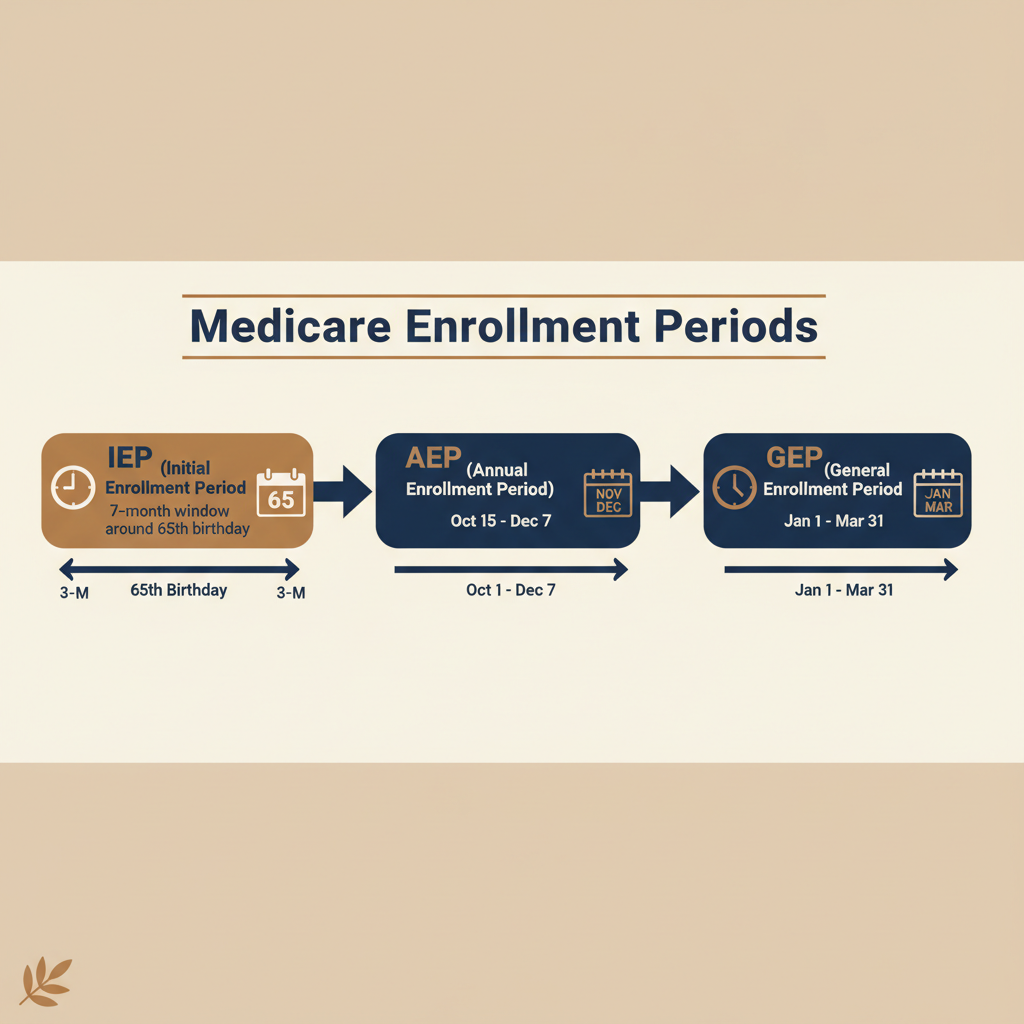
- Initial Enrollment Period (IEP): Your IEP is a 7-month window centered around your 65th birthday. It begins 3 months before the month you turn 65, includes your birthday month, and extends 3 months after. For example, if your birthday is June 15, your IEP runs from March 1 through September 30. Enrolling during this period ensures coverage starts on time and helps you avoid late-enrollment penalties.
- General Enrollment Period (GEP): If you miss your IEP, you can enroll during the GEP, which runs from January 1 to March 31 each year. Coverage begins July 1, but you may face permanent late-enrollment penalties added to your Part B premium.
- Special Enrollment Periods (SEPs): You may qualify for an SEP if you have employer coverage past age 65, are disabled, or experience certain life events like moving out of your plan's service area. SEPs allow penalty-free enrollment outside standard periods.
- Annual Enrollment Period (AEP): If you already have Medicare, AEP (October 15 – December 7) lets you switch between Original Medicare and Medicare Advantage, change Advantage plans, or join/drop/change a Part D drug plan.
What is the difference between Medicare Advantage and Medigap?
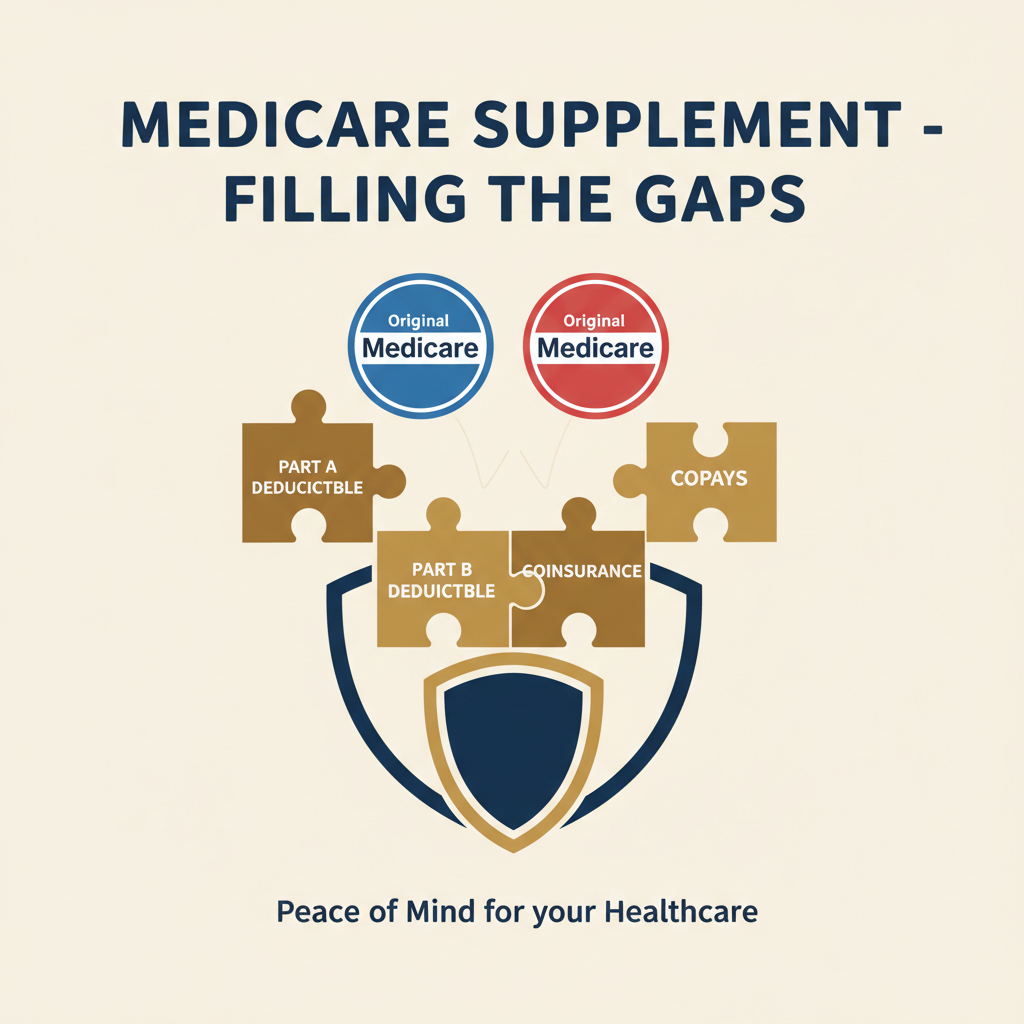
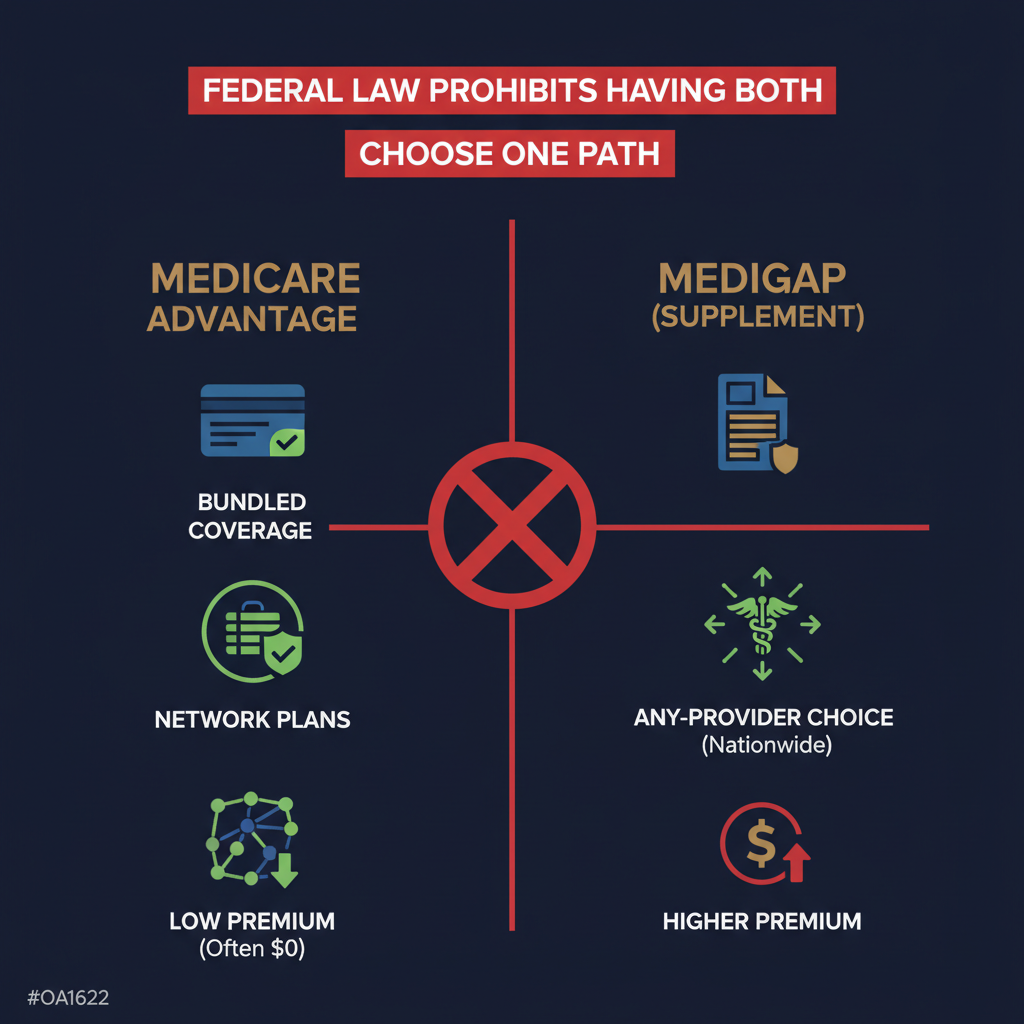
- Structure: Medicare Advantage (Part C) is an all-in-one alternative to Original Medicare offered by private insurers approved by Medicare. It replaces Parts A and B and typically includes Part D drug coverage plus extras like dental, vision, and fitness memberships. Medigap (Medicare Supplement) is additional coverage that works alongside Original Medicare—it doesn't replace it. Medigap helps pay Original Medicare's deductibles, copays, and coinsurance.
- Provider Access: With Medigap, you can see any provider nationwide who accepts Medicare—no networks, no referrals. Medicare Advantage usually restricts you to a network (HMO or PPO) and may require referrals for specialists.
- Costs: Medigap has higher monthly premiums but lower out-of-pocket costs when you use care. Medicare Advantage often has low or $0 premiums but higher copays/coinsurance per service.
- Portability: Medigap is ideal for snowbirds or frequent travelers since it works nationwide. Medicare Advantage plans are location-specific and may not cover care outside your service area except for emergencies.
- Important: You cannot have both simultaneously—it's illegal for insurers to sell you a Medigap policy if you have Medicare Advantage.
Does Medicare cover prescription drugs?
- Original Medicare Limitations: Parts A and B do NOT cover most outpatient prescription drugs. Part A only covers medications administered during a hospital stay, and Part B covers limited drugs like chemotherapy, certain injections, or immunosuppressants. For everyday prescriptions (blood pressure meds, statins, insulin, etc.), you need separate drug coverage.
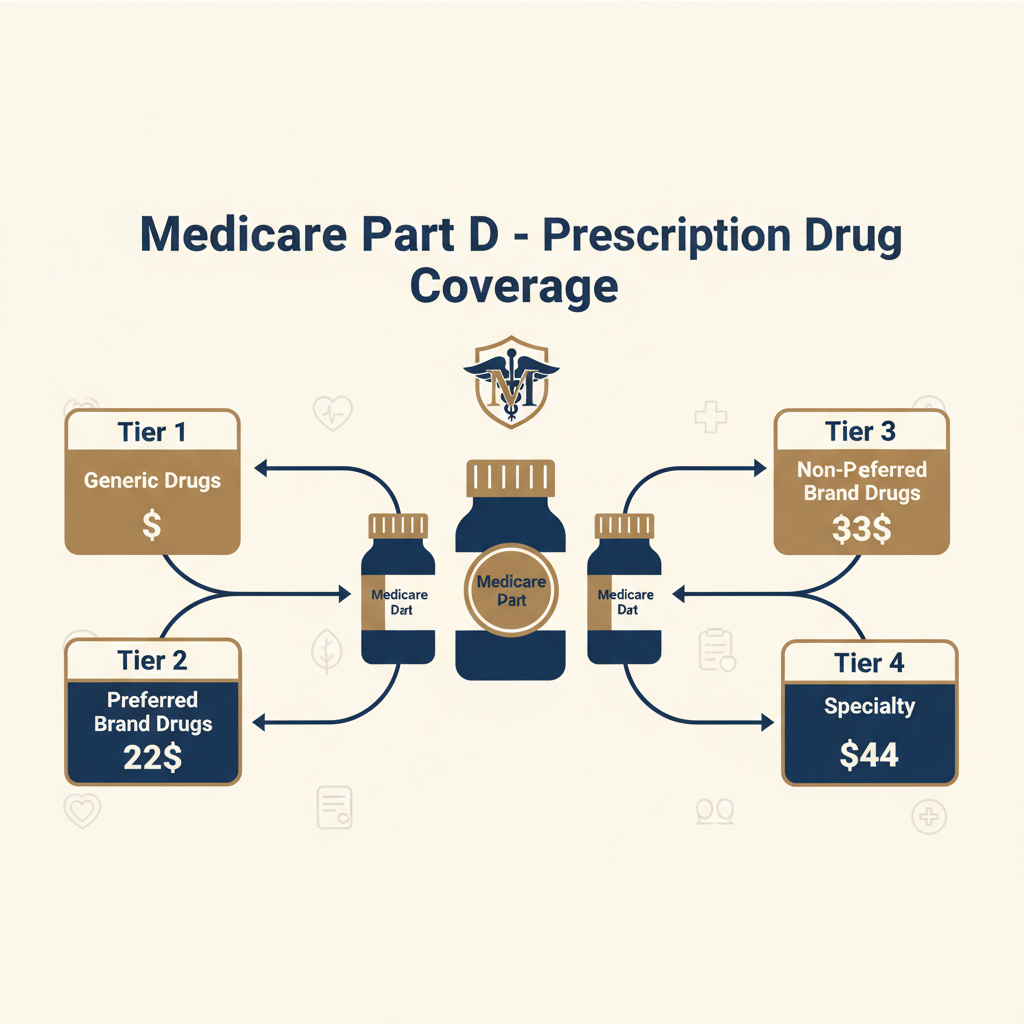
- Part D Plans: Standalone Part D Prescription Drug Plans (PDPs) are sold by private insurers and work alongside Original Medicare. You pay a monthly premium (typically $15–$100+) plus copays/coinsurance per prescription. Plans have formularies (drug lists) organized in tiers—generic drugs cost least, brand-name and specialty drugs cost more.
- Medicare Advantage with Drug Coverage (MAPD): Most Medicare Advantage plans include Part D coverage built in, so you get medical and drug coverage in one plan. This simplifies billing and often costs less than buying separate Part D.
- Late-Enrollment Penalty: If you go 63+ consecutive days without "creditable" drug coverage after becoming eligible for Medicare, you'll owe a permanent penalty added to your Part D premium. The penalty is 1% of the national base premium per month without coverage.
Can I change my Medicare coverage?
- Annual Enrollment Period (AEP): Every year from October 15 to December 7, anyone with Medicare can make changes. You can switch from Original Medicare to Medicare Advantage (or vice versa), change from one Advantage plan to another, or join/drop/change a Part D drug plan. Changes take effect January 1.
- Medicare Advantage Open Enrollment (Jan 1 – Mar 31): If you're already in a Medicare Advantage plan, you can switch to a different Advantage plan or drop Advantage and return to Original Medicare (with or without Part D) during this window. One change allowed per year.
- Special Enrollment Periods (SEPs): You may qualify to change coverage outside standard periods if you move out of your plan's service area, lose employer coverage, qualify for Medicaid, or your plan changes its contract with Medicare. SEPs are typically 2 months long.
- Medigap Protections: Your right to buy a Medigap policy is NOT guaranteed except during your 6-month Medigap Open Enrollment Period when you first enroll in Part B. After that, insurers can use medical underwriting and deny you or charge more unless you qualify for specific guaranteed-issue rights (like losing employer coverage or your Advantage plan leaving Medicare).
What does Medicare NOT cover?
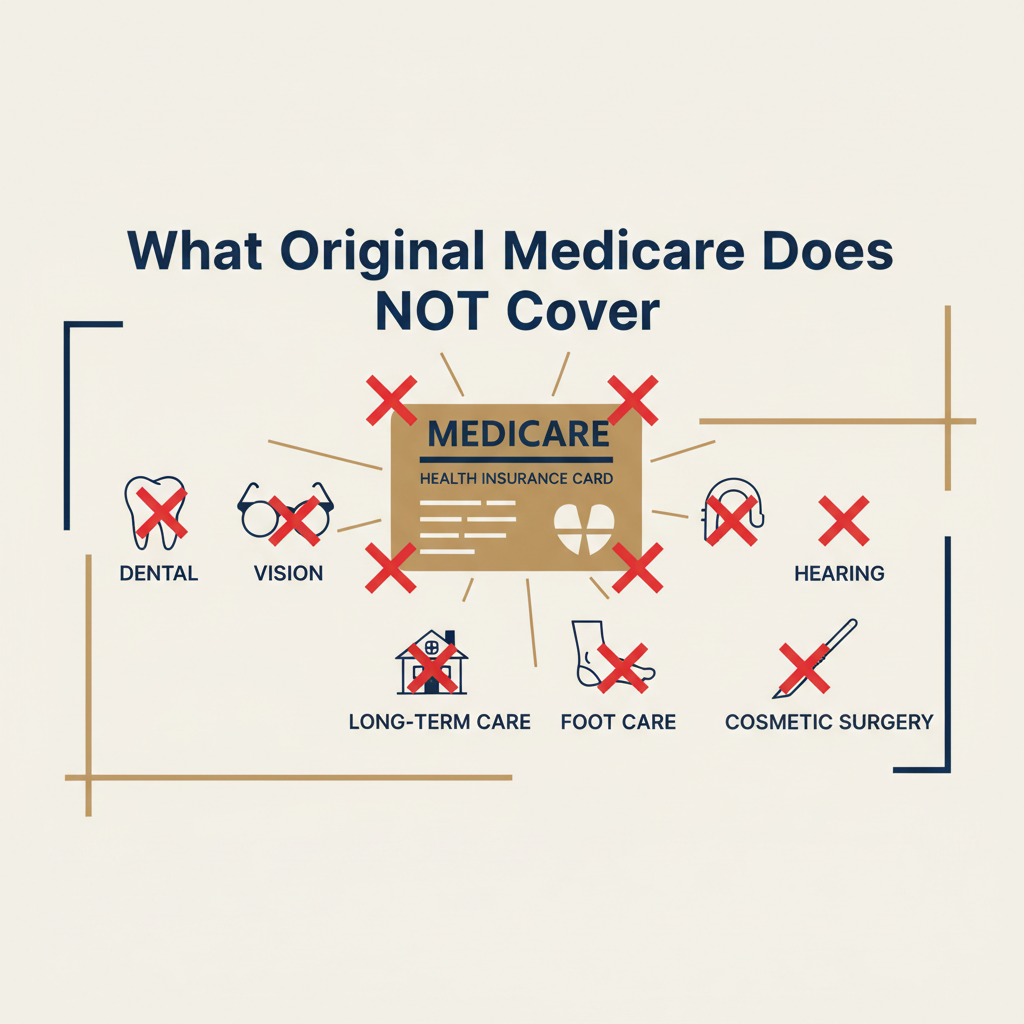
- Long-Term Custodial Care: Original Medicare does NOT cover long-term care in nursing homes or assisted living facilities if you only need help with daily activities (bathing, dressing, eating). It covers up to 100 days in a skilled nursing facility for rehabilitation after a qualifying 3-day hospital stay, but not ongoing custodial care. Medicaid covers long-term care for those who qualify financially.
- Dental Care: Routine dental services (cleanings, fillings, extractions, dentures) are NOT covered by Original Medicare. Some Medicare Advantage plans include dental benefits, but coverage varies widely.
- Vision: Original Medicare doesn't cover routine eye exams, eyeglasses, or contact lenses. Exceptions include cataract surgery (one pair of glasses or contacts afterward) and diabetic retinopathy exams.
- Hearing: Hearing aids and fitting exams are NOT covered by Original Medicare. Some Advantage plans offer hearing benefits.
- Foot Care: Routine foot care (corn/callus removal) is not covered. Podiatry services for medical conditions (diabetes, injuries) are covered.
- Cosmetic Surgery: Procedures done solely for appearance are not covered. Reconstructive surgery after accidents or disease may be covered.
- Acupuncture: Only covered for chronic low back pain under specific conditions.
- Most Care Outside the U.S.: Original Medicare generally doesn't cover care received outside the 50 states and territories, except in rare border-area or emergency situations.
What are Medicare Advantage networks?
- HMO (Health Maintenance Organization): HMOs are the most common Medicare Advantage network type. You must use in-network doctors and hospitals (except emergencies). You typically need a referral from your primary care physician (PCP) to see specialists. HMOs often require you to choose a PCP and get prior authorization for certain services. Premiums are usually lower, but flexibility is limited.
- PPO (Preferred Provider Organization): PPOs offer more flexibility. You can see out-of-network providers, but you'll pay significantly more. Referrals are usually not required. PPOs have two tiers of pricing: lower costs for in-network care, higher costs for out-of-network. Premiums tend to be higher than HMOs.
- HMO-POS (Point of Service): Hybrid plans that work like HMOs but allow limited out-of-network coverage for certain services (often at higher cost). You still need a PCP and referrals for in-network specialists.
- PFFS (Private Fee-for-Service): These plans don't have networks but determine how much they'll pay providers. You can see any Medicare-approved provider who accepts the plan's payment terms. Not all providers accept PFFS plans.
- SNPs (Special Needs Plans): Designed for people with specific diseases or characteristics (like diabetes, institutionalization, or dual Medicare/Medicaid eligibility). SNPs have networks tailored to their members' needs.
- Key Point: Always verify your current doctors and hospitals are in-network before enrolling. Networks can change annually, and plans must notify you if your providers leave the network.
How do I choose between Medigap and Medicare Advantage?
- Choose Medigap If: You want maximum flexibility to see any Medicare-accepting provider nationwide without referrals. You travel frequently or live in multiple states (snowbird). You prefer predictable costs—higher monthly premiums but minimal out-of-pocket when you use care. You have chronic conditions requiring frequent specialist visits. You want to avoid network restrictions and prior authorizations. You can afford higher premiums ($100–$300+/month for Medigap + Part D).
- Choose Medicare Advantage If: You want lower monthly premiums (many plans are $0 premium beyond Part B). You're comfortable using a network of doctors and hospitals. You want extra benefits like dental, vision, hearing, fitness memberships, or transportation. You take prescription drugs and want them included in one plan. You prefer an annual out-of-pocket maximum (capped at $6,700 in 2024 for in-network care). You don't travel extensively outside your plan's service area.
- Financial Trade-Off: Medigap = higher fixed costs (premiums), lower variable costs (copays). Medicare Advantage = lower fixed costs, higher variable costs (per-service copays/coinsurance).
- Health Considerations: If you have serious health conditions requiring frequent care, broader access may be worth the premium. If you're generally healthy and want extra benefits, Advantage may suit you better.
- Future Flexibility: Remember, switching from Advantage to Medigap later may require medical underwriting unless you have guaranteed-issue rights. It's easier to switch from Medigap to Advantage (anytime during AEP) than vice versa.
What is the Medicare Part D donut hole?
- The Coverage Gap Explained: The Part D "donut hole" or coverage gap is a temporary limit on what your drug plan covers after you and your plan have spent a certain amount on covered drugs. In 2024, you enter the gap after total drug costs reach $5,030 (this includes what you've paid plus what your plan has paid).
- Stages of Part D Coverage: Stage 1—Annual Deductible: You pay 100% of drug costs until meeting your plan's deductible (max $545 in 2024, some plans have $0 deductible). Stage 2—Initial Coverage: You pay a copay/coinsurance (typically 25%) while your plan pays the rest until total costs hit $5,030. Stage 3—Coverage Gap: You pay 25% of both brand-name and generic drug costs. The drug manufacturer provides a 70% discount on brands, and your plan pays 5% on generics. Stage 4—Catastrophic Coverage: Once your out-of-pocket spending reaches $8,000
- , you pay only 5% of drug costs or a small copay for the rest of the year.
- Inflation Reduction Act Changes: The 2022 Inflation Reduction Act is gradually eliminating the donut hole. In 2024, you pay 25% in the gap (down from 40% previously). By 2025, there will be a $2,000 annual cap on out-of-pocket drug costs for Part D enrollees, effectively eliminating catastrophic costs.
- What Counts Toward the Gap: Your deductible, copays, and coinsurance count toward reaching the gap. The monthly premium does NOT count. For brand-name drugs, the manufacturer discount counts toward your out-of-pocket total.
- Strategies to Minimize Impact: Use generic drugs when available. Apply for Extra Help (Low-Income Subsidy) if you qualify—it reduces or eliminates the gap. Review your plan annually; some plans offer gap coverage as an extra benefit.
When is the best time to enroll in Medigap?
- Medigap Open Enrollment Period (OEP): This is the absolute best time to buy Medigap. Your 6-month OEP begins the first month you're both 65 or older AND enrolled in Medicare Part B. During this window, you have guaranteed issue rights—insurers cannot deny you coverage, charge you more due to pre-existing conditions, or impose waiting periods. This is true even if you have serious health issues like cancer, heart disease, or diabetes.
- What Happens After OEP: Once your OEP ends, you generally lose guaranteed issue rights. Insurers can use medical underwriting, meaning they can review your health history, require medical exams, deny coverage, or charge significantly higher premiums based on your health status. Some states have additional protections (like continuous enrollment or birthday rules), but federal law doesn't require insurers to sell you Medigap after OEP.
- Guaranteed-Issue Exceptions: You may get guaranteed issue rights outside OEP if: you lose employer/group health coverage, your Medicare Advantage plan leaves Medicare or you move out of its service area, you're in a Medicare SELECT plan and move out of its area, you have a Medigap policy and your insurer goes bankrupt/loses license, or you're in a trial period switching to Advantage for the first time.
- Pre-Existing Condition Waiting Periods: If you buy Medigap after OEP without guaranteed rights, insurers can impose up to a 6-month waiting period for pre-existing conditions (conditions diagnosed/treated in the 6 months before your policy starts). However, if you had 6+ months of continuous prior creditable coverage, the waiting period is reduced or waived.
- Strategic Timing: If you know you'll want Medigap, enroll during OEP even if you're healthy. Once you develop health issues, you may be locked out. Don't delay thinking you'll buy it later—underwriting can make it unaffordable or unavailable.
Can I have both Medicare Advantage and Medigap?
- Legal Prohibition: No, you cannot legally have both Medicare Advantage and Medigap at the same time. Federal law prohibits insurers from selling you a Medigap policy if you're enrolled in Medicare Advantage. If you already have Medigap and join a Medicare Advantage plan, you should generally drop the Medigap (though you may want to keep it during your first year in Advantage as a backup during the trial period).
- Why They're Incompatible: Medicare Advantage replaces Original Medicare as your primary coverage—it becomes your Parts A and B. Medigap only supplements Original Medicare, not Medicare Advantage. Medigap policies don't pay Medicare Advantage copays, deductibles, or coinsurance. They're designed for two different systems.
- Common Confusion: Some people think having both provides "extra protection," but it doesn't. You'd be paying Medigap premiums (often $100–$300/month) for a policy that won't pay any of your Advantage plan costs. It's a waste of money.
- Switching Between Them: You CAN switch from Medicare Advantage to Original Medicare + Medigap, but with important caveats: During your first 12 months in Advantage, you have a trial right to return to Original Medicare and buy any Medigap policy sold in your state (guaranteed issue). After 12 months, you generally need guaranteed-issue rights or must pass medical underwriting to buy Medigap.
- Best Practice: Before joining Medicare Advantage, decide if you might want Medigap later. If you're unsure, consider starting with Original Medicare + Medigap during your OEP to lock in guaranteed issue rights. You can always switch to Advantage later (during AEP), but getting Medigap after that may be difficult if your health declines.
Ready to Find Your Plan?
Speak with a licensed professional who can help you compare Medicare plans available in your area and choose the right coverage for your needs and budget.