Consumer Education
Final Expense Whole Life Insurance
This overview provides education on a vital tool that helps folks prepare for the inevitable while ensuring their funeral and related burial expenses are not a burden on their family!
Final Expense Whole Life Insurance Video
What Is Final Expense Insurance?
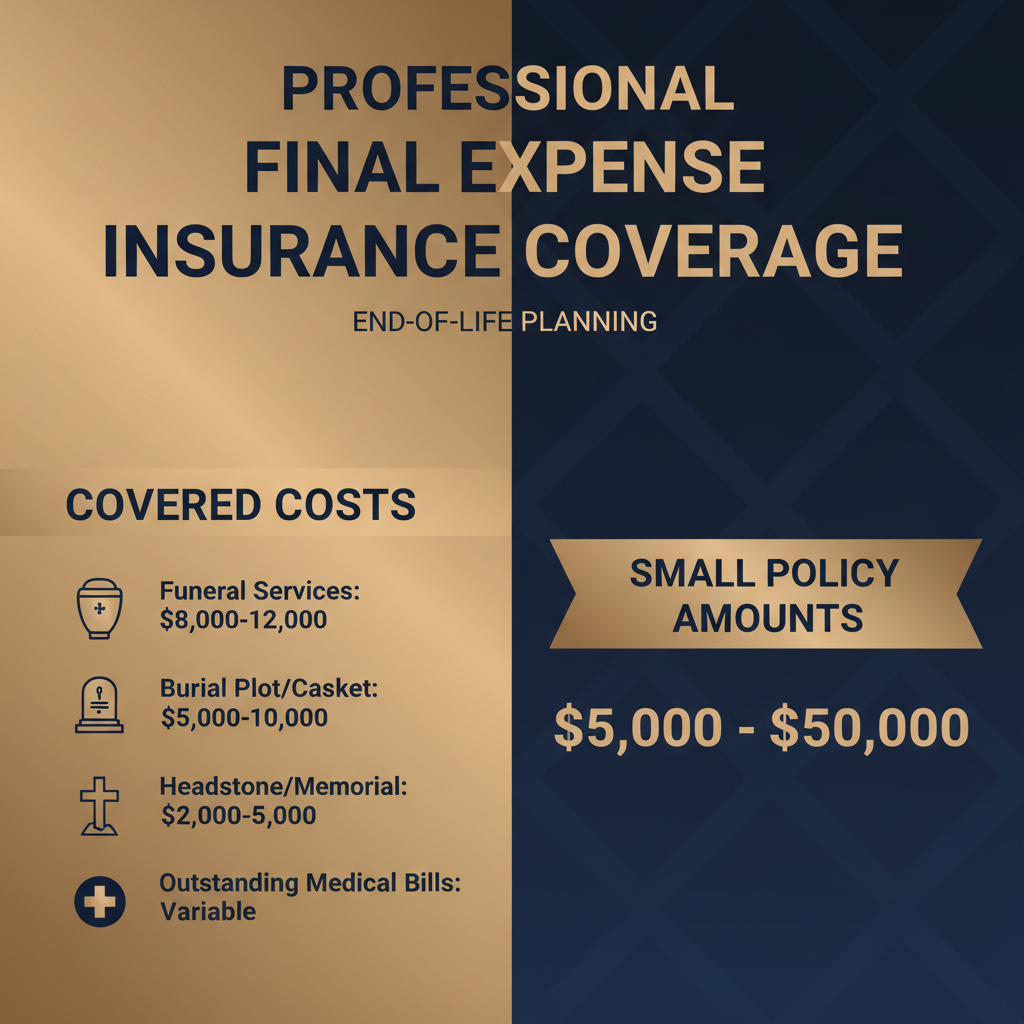
Final expense insurance is a type of whole life insurance designed specifically to cover end-of-life costs like funeral expenses, burial or cremation, medical bills, and other final debts. Also called burial insurance or funeral insurance, these policies typically offer smaller death benefits ranging from $5,000 to $50,000, making them affordable for seniors on fixed incomes. Unlike pre-need funeral policies that tie you to specific funeral homes, final expense insurance pays cash directly to your beneficiaries, who can use it for any purpose. The policy is permanent, lasting your entire lifetime, with level premiums that never increase. Most final expense policies feature simplified issue underwriting, meaning no medical exam is required — just a short health questionnaire. This makes coverage accessible for people with health conditions who might not qualify for traditional life insurance. The average funeral costs $10,000-$15,000, and final expense insurance ensures your family won't face this financial burden during their time of grief.
How Much Coverage Do I Need?
Determining the right coverage amount depends on your specific end-of-life expense goals. Start by estimating funeral costs: a traditional funeral with burial averages $10,000-$15,000, while cremation is typically $3,000-$7,000. Add any outstanding medical bills, credit card debt, or personal loans you don't want to leave for family. Consider legal and administrative costs for settling your estate, which can run $2,000-$5,000. Some people also include a small inheritance for grandchildren or a donation to their church or charity. A common approach is $15,000 for basic funeral and final bills, $25,000 for more comprehensive coverage including debt payoff, or $50,000 for those wanting to leave a legacy. It's better to have slightly too much than too little — beneficiaries can always use excess funds for living expenses or savings. Remember that coverage amounts affect premiums, so balance your needs with what's affordable on your budget. Many people purchase multiple smaller policies over time to build adequate coverage without straining their monthly budget.
What Does It Cost?
Final expense premiums vary based on age, gender, health, and coverage amount. As a general guideline, a $10,000 policy might cost $30-$50 per month for a 60-year-old, $50-$80 for a 70-year-old, and $80-$150 for an 80-year-old. Women typically pay 20-30% less than men due to longer life expectancy. Smokers pay significantly higher rates, sometimes double the non-smoker premium. Different policy structures affect cost: level benefit policies (full death benefit from day one) cost more than graded benefit policies (benefit increases over 2-3 years). Simplified issue policies (health questions, no exam) cost more than fully underwritten policies but are easier to qualify for. Premiums are guaranteed to remain level for life — they never increase with age. Many companies offer monthly premium billing to make payments manageable on fixed incomes. Some carriers offer first-month-free or family discount promotions. While cost is important, the cheapest policy isn't always best — consider the company's financial strength, claims-paying history, and customer service reputation.
Is There A Medical Exam?
Most final expense policies don't require a medical exam, which is one of their biggest advantages. Simplified issue policies ask 5-10 health questions on the application, covering conditions like cancer, heart disease, stroke, and terminal illness. Approval can be instant or within 24-48 hours. Some conditions may result in higher premiums or denial, but many health issues are acceptable. Graded benefit policies have no health questions — everyone is approved regardless of health. However, if you die within the first 2-3 years from natural causes, beneficiaries receive only a return of premiums plus interest (typically 10%) instead of the full death benefit. Accidental death is covered at the full amount from day one. After the graded period (usually 2-3 years), the full death benefit is paid for any cause of death. Fully underwritten policies (rare in final expense) may require a phone interview or medical records but offer lower premiums for healthy applicants. The no-exam feature makes final expense accessible for people who couldn't get traditional life insurance due to health conditions.
How Quickly Can I Get Covered?
Final expense insurance can be approved and in force very quickly — often within 24-72 hours for simplified issue policies. The application takes 10-15 minutes and can be completed over the phone or online. You'll answer basic questions about age, health, and lifestyle. For simplified issue, the insurance company checks prescription history and may review medical databases (MIB, prescription drug database, motor vehicle records). If you qualify, approval is often instant, and the policy is issued within 1-3 business days. The first premium is typically charged at application, and coverage begins immediately upon approval. Graded benefit policies with no health questions can be approved same-day. The only delay might be if the company needs additional medical records or clarification on health answers. Some carriers offer temporary coverage during underwriting, so if you die while the application is pending, beneficiaries receive a portion of the death benefit. This speed makes final expense ideal for seniors who need coverage quickly or have upcoming medical procedures.
What If I Have Health Issues?
Final expense insurance is specifically designed for people with health issues who can't get traditional life insurance. Most companies accept applicants with common conditions like high blood pressure, diabetes, heart disease, COPD, and even some cancers (depending on type and how long in remission). Each company has different underwriting guidelines, so working with an independent agent who represents multiple carriers is crucial. Some specialize in specific conditions — for example, one company may be more lenient with diabetes while another is better for heart conditions. If you're declined by one carrier, another may approve you. For serious conditions like active cancer, recent heart attack, or terminal illness, graded benefit policies guarantee approval with no health questions. These policies return premiums plus interest if death occurs in the first 2-3 years, then pay full benefit afterward. Even people on oxygen, with kidney disease, or awaiting organ transplants can often qualify for some form of final expense coverage. The key is honest disclosure — lying on applications can result in claim denials.

Can I Name Multiple Beneficiaries?
Yes, final expense policies allow you to name multiple beneficiaries and specify exact percentages for each. You can name primary beneficiaries (who receive proceeds first) and contingent beneficiaries (who receive proceeds if primary beneficiaries predecease you). Common arrangements include: splitting equally among children, naming a spouse as primary and children as contingent, or designating specific percentages (60% to spouse, 40% to children). You can also name trusts, charities, or churches as beneficiaries. The policy owner controls beneficiary designations and can change them at any time by submitting a change-of-beneficiary form to the insurance company. This flexibility ensures your money goes exactly where you intend. It's important to review beneficiary designations periodically, especially after major life events like marriages, divorces, births, or deaths. Unlike wills, beneficiary designations bypass probate and go directly to recipients, typically within 30-60 days after claim submission. Make sure beneficiaries are aware of the policy so they can file a claim when needed.
What Happens To Unused Funds?
Final expense insurance pays the full death benefit to beneficiaries in a lump sum, and they can use the money for any purpose. If funeral and final expenses cost less than the death benefit, beneficiaries keep the remaining funds tax-free. There's no requirement to spend the money on funeral costs — it's their money to use as they see fit. Common uses for excess funds include: paying off the deceased's outstanding debts (credit cards, medical bills, personal loans), covering estate settlement costs and legal fees, creating a small inheritance for grandchildren, donating to church or charity in the deceased's memory, or simply saving for future needs. Some families use excess funds to prepay remaining family members' funeral expenses. The flexibility of cash benefits is a major advantage over pre-need funeral contracts, which lock funds to specific funeral homes and services. This is why it's often better to purchase slightly more coverage than you think you need — the excess provides financial flexibility for your family during a difficult time.
Is Final Expense Different From Pre-Need Funeral Insurance?
Yes, final expense insurance and pre-need funeral insurance are fundamentally different products. Final expense is a life insurance policy that pays cash directly to your named beneficiaries, who can use it for any purpose — funeral costs, medical bills, debts, or living expenses. The money is flexible and not tied to specific services or providers. Pre-need funeral insurance is a contract with a specific funeral home that prepays for predetermined funeral services. The funds are typically held in a trust or insurance policy assigned to that funeral home. The main disadvantage of pre-need is lack of flexibility — if you move, the funeral home may not transfer easily, or if the funeral home goes out of business, you may lose funds. Pre-need also doesn't cover non-funeral expenses like medical bills or debts. Final expense insurance gives your family control and flexibility to handle all final costs as needed. Additionally, final expense policies are portable — they go with you anywhere in the country. Most financial advisors recommend final expense over pre-need for these reasons, though some people choose to have both for specific funeral preplanning.
Should I Buy Final Expense Insurance?
Final expense insurance makes sense if:
- You're age 50-85 and want to ensure your funeral doesn't burden family financially.
- You have limited savings and don't want family to pay out-of-pocket for final costs.
- You have health issues that prevent qualifying for traditional life insurance.
- You want to leave a small inheritance or make a charitable donation.
- You prefer cremation or a simple funeral but want funds available for your wishes.
- You're on a fixed income and need affordable, level premiums.
- You want to cover outstanding debts so family isn't responsible. Final expense may not be necessary if: you have substantial savings or investments earmarked for final expenses, you have existing life insurance with adequate death benefit, your family has sufficient resources to handle costs comfortably, or you've made other arrangements (like payable-on-death accounts). The ideal candidate is a senior on fixed income who values peace of mind and wants to protect family from unexpected expenses during grief. Even a small $10,000 policy can make a significant difference in easing the financial burden on loved ones.