Consumer Education
An Insurance Journey
What Is Life Insurance?
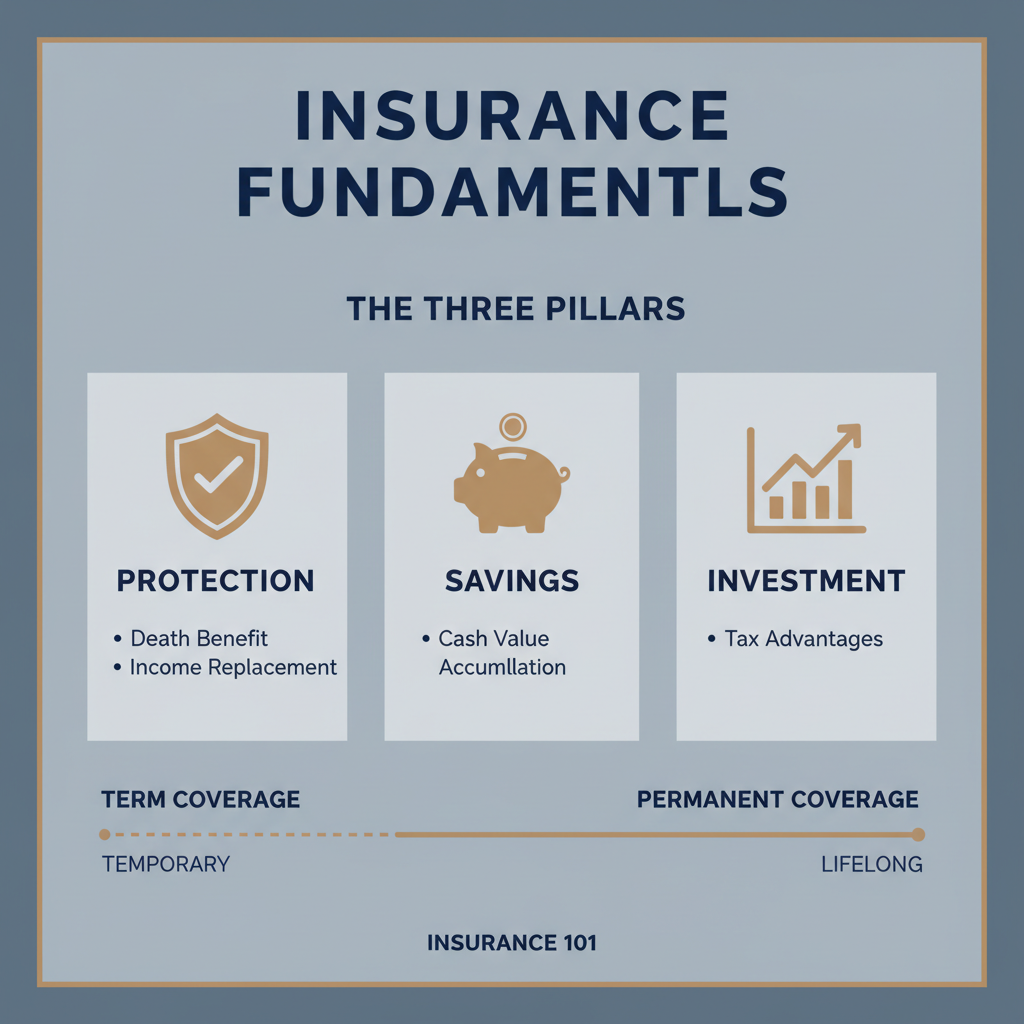
Life insurance is a contract between you and an insurance company where, in exchange for premium payments, the insurer promises to pay a death benefit to your named beneficiaries when you die. The death benefit is typically income tax-free and can be used for any purpose: replacing lost income, paying off debts, funding education, covering final expenses, or leaving a legacy. Life insurance comes in two main categories: term insurance (temporary coverage for 10, 20, or 30 years) and permanent insurance (lifelong coverage with cash value accumulation). Term insurance is simple and affordable, providing maximum protection per premium dollar. Permanent insurance (whole life, universal life, indexed universal life) combines death benefit protection with a savings component that builds cash value over time. The right type depends on your needs, budget, and goals. Life insurance is the foundation of financial planning for anyone with dependents, debts, or desires to leave a legacy. It provides peace of mind that your loved ones will be financially secure even if you're not there to provide for them.
Why Do I Need Life Insurance?
Life insurance serves multiple critical purposes in financial planning. First, income replacement: if you die prematurely, life insurance replaces your earnings, allowing your family to maintain their lifestyle, pay the mortgage, and fund children's education. Second, debt payoff: proceeds can eliminate mortgages, car loans, credit cards, and other debts that would burden your family. Third, final expenses: funerals and burial costs average $10,000-$15,000, and life insurance ensures these costs don't devastate your family financially. Fourth, education funding: death benefits can fund college for children or grandchildren, ensuring their dreams aren't compromised. Fifth, estate planning: life insurance provides liquidity to pay estate taxes, equalize inheritances among heirs, or leave a legacy to charity. Sixth, business protection: key person insurance, buy-sell agreements, and executive compensation all rely on life insurance. Seventh, special needs care: parents of special needs children use life insurance to fund special needs trusts for lifelong care. Even if you're single, life insurance can cover final expenses and debts so parents or siblings aren't burdened. The need for life insurance exists whenever others depend on you financially or when you want to ensure your death doesn't create financial hardship for loved ones.
What Is Term Life Insurance?
Term life insurance provides coverage for a specific period — typically 10, 20, or 30 years — with level premiums and a fixed death benefit. If you die during the term, beneficiaries receive the full death benefit tax-free. If you outlive the term, the policy expires with no value, similar to auto or home insurance. Term insurance has no cash value or investment component — it's pure protection. This simplicity makes term insurance very affordable, especially for young, healthy individuals. A healthy 30-year-old might pay $20-30/month for $500,000 of 20-year coverage. Term is ideal for temporary needs: replacing income during working years, paying off a mortgage, funding children's education, or covering business debts. Most financial advisors recommend term insurance for temporary protection needs because it provides maximum death benefit per premium dollar. However, approximately 99% of term policies never pay a death benefit because people let them lapse or outlive the term. This makes term insurance best suited for those who need affordable, temporary coverage with the understanding that it's a "use it or lose it" product. Many term policies offer conversion options to permanent insurance without medical underwriting, providing flexibility if needs change.
What Is Permanent Life Insurance?
Permanent life insurance provides coverage for your entire lifetime, not just a specific term. As long as premiums are paid, the policy remains in force until death, whenever that occurs. Permanent insurance includes a cash value component that grows over time, creating a savings element you can access during your lifetime. The three main types are: whole life (guaranteed premiums, guaranteed cash value growth, potential dividends), universal life (flexible premiums and death benefits, interest-based cash value growth), and indexed universal life (cash value grows based on stock market index performance with downside protection). Permanent insurance premiums are higher than term because they cover the entire lifetime and build cash value. However, permanent insurance provides guarantees term cannot: lifelong coverage regardless of health changes, cash value accumulation, tax-advantaged growth, and potential tax-free retirement income through policy loans. Permanent insurance is ideal for: final expense planning, estate taxes, special needs dependents, wealth transfer, business succession, and tax-advantaged retirement planning. Many families benefit from having both term and permanent insurance — term for temporary, high-need periods and permanent for lifelong needs. Permanent insurance is a long-term commitment that rewards consistency and patience.
What Is Whole Life Insurance?
Whole life insurance is the oldest and most straightforward form of permanent life insurance. It provides guaranteed lifelong coverage with level premiums that never increase. A portion of each premium pays for the death benefit, while the remainder builds cash value at a guaranteed minimum interest rate. Many mutual insurance companies also pay dividends (not guaranteed) based on company performance, which can be taken as cash, used to reduce premiums, or reinvested to purchase additional paid-up insurance. The cash value grows tax-deferred and can be accessed through policy loans or withdrawals during your lifetime. Loans don't require credit checks or income verification, and the cash value continues earning dividends even while borrowed against. Whole life provides certainty: guaranteed death benefit, guaranteed cash value growth, guaranteed level premiums. This makes it ideal for conservative investors who value guarantees over maximum potential returns. Whole life has been a financial planning cornerstone for over 150 years, providing both protection and forced savings. Premiums are higher than term but build equity you own and can access. Whole life works best as a long-term commitment (15+ years) to allow cash value to accumulate meaningfully.
What Is Indexed Universal Life Insurance?
Indexed universal life (IUL) insurance is a flexible permanent policy that combines death benefit protection with cash value growth tied to stock market index performance (like the S&P 500). Unlike whole life's guaranteed rate, IUL cash value grows based on index performance, subject to a "floor" (typically 0%) and a "cap" (varies by carrier). When the index goes up, your cash value grows up to the cap. When the index goes down, your cash value is protected by the floor — you earn 0% but never lose money. This provides growth potential with downside protection. IUL offers flexible premiums: you can increase payments when you have extra money or decrease them during tight periods (as long as cash value covers policy costs). You can also adjust the death benefit over time as needs change. IUL's most powerful feature is tax-free retirement income: once substantial cash value accumulates, you can take policy loans tax-free to supplement retirement income. The cash value continues growing even while you take loans, and if structured properly, the policy can provide income for life. IUL is ideal for high-income earners who have maxed out other tax-advantaged accounts, business owners seeking tax diversification, and anyone concerned about market volatility near retirement.
How Much Life Insurance Do I Need?
Determining life insurance needs requires analyzing your specific financial obligations and goals. Common approaches include:
- Income replacement — 10-15 times your annual income to replace earnings during working years.
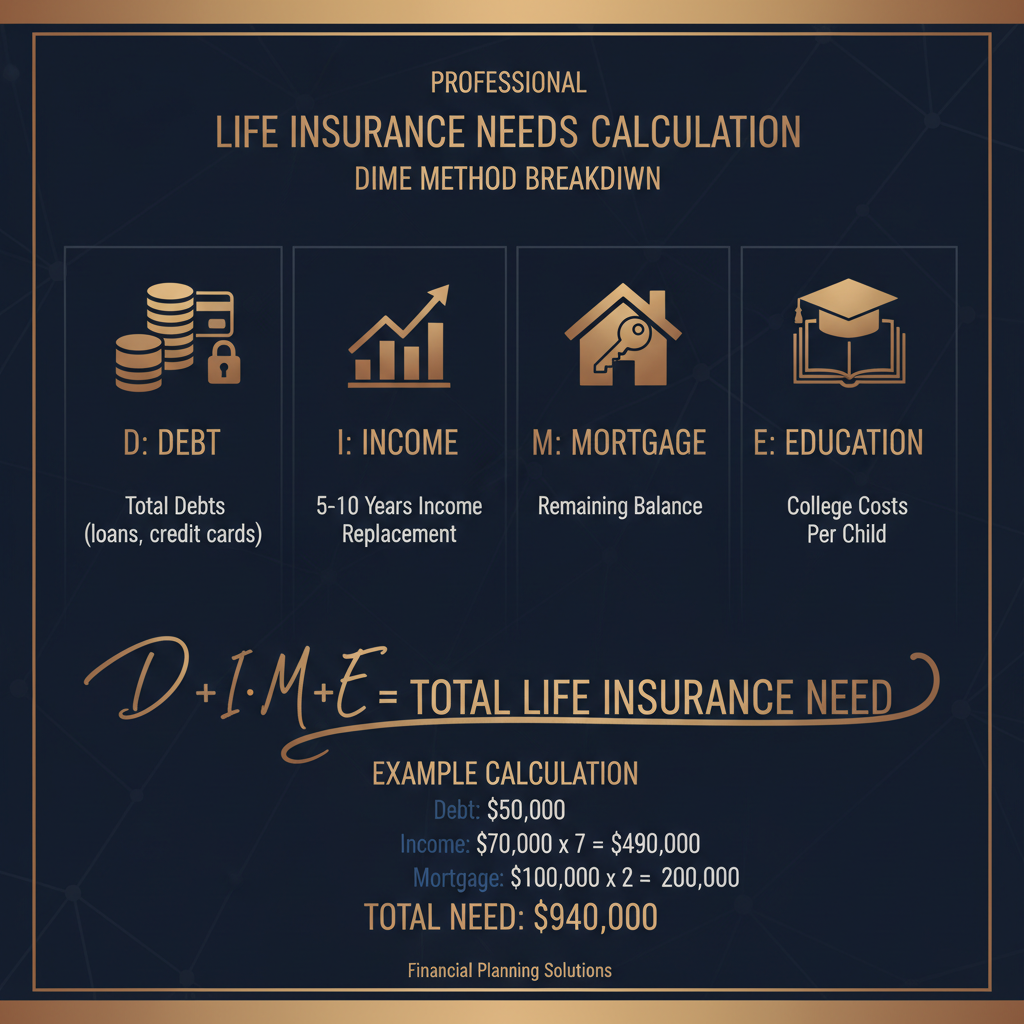
- DIME method — Debt (mortgage, loans) + Income replacement (years needed × income) + Mortgage balance + Education costs for children.
- Needs analysis — calculating specific expenses: final expenses ($15,000-25,000), outstanding debts (mortgage, car loans, credit cards), income replacement (years until retirement × annual income minus spouse's income), children's education ($50,000-200,000 per child), and any special needs care. A typical young family might need $500,000-$1,000,000 to cover mortgage payoff, 10 years of income replacement, and college funding. Single individuals without dependents may need little or no life insurance. Consider both immediate needs (final expenses, debt payoff) and ongoing needs (living expenses, education). Also factor in existing resources: savings, investments, retirement accounts, and spouse's income. Many people are underinsured because they focus on affordability rather than actual needs. Review coverage every 3-5 years or after major life events (marriage, children, home purchase) to ensure it remains adequate. Working with a qualified agent helps ensure you purchase the right amount for your situation.
What Factors Affect Life Insurance Costs?
Life insurance premiums are determined by multiple factors:
- Age — younger applicants pay significantly less because they're statistically less likely to die soon. A 30-year-old might pay half what a 50-year-old pays for the same coverage.
- Health — excellent health qualifies for preferred rates, while conditions like diabetes, heart disease, or cancer result in higher premiums or denial.
- Gender — women pay 20-30% less than men due to longer life expectancy.
- Smoking status — smokers pay 2-3 times higher premiums than non-smokers.
- Coverage amount — higher death benefits cost more, though per-dollar costs decrease at higher amounts.
- Policy type — term insurance costs less than permanent insurance.
- Term length — longer terms cost more than shorter terms.
- Occupation and hobbies — dangerous jobs (logging, commercial fishing) or risky hobbies (skydiving, scuba diving) can increase premiums.
- Family medical history — early deaths from heart disease or cancer in parents or siblings can affect rates.
- Driving record — DUIs or multiple violations can increase premiums. Shopping multiple carriers is crucial because underwriting guidelines vary significantly. An independent agent representing multiple companies can find the best rates for your specific profile.
What Is The Application Process?
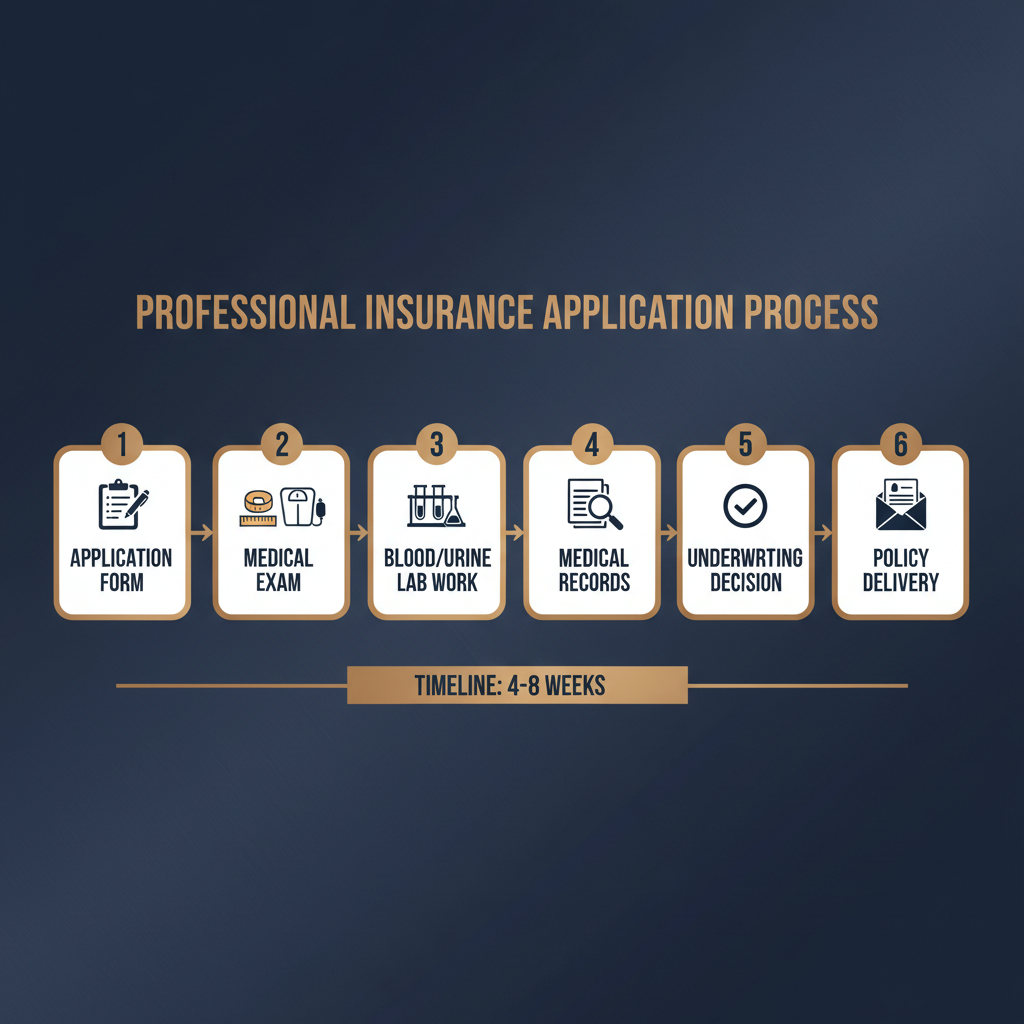
The life insurance application process typically involves several steps. First, you complete an application with personal information (age, occupation, income), health history (current conditions, medications, treatments), family medical history, lifestyle questions (smoking, alcohol, hazardous activities), and financial information (coverage amount, beneficiary designations). Second, you may undergo a medical exam, which includes height, weight, blood pressure, pulse, blood sample (cholesterol, glucose, HIV), and urine sample (drug screen, nicotine). The exam is free and usually takes 20-30 minutes at your home or office. Third, the insurance company reviews your application, medical exam results, prescription history, medical records (if needed), motor vehicle record, and sometimes financial records. Fourth, underwriters assign a risk class (preferred plus, preferred, standard plus, standard, substandard) that determines your premium. Fifth, you receive a policy offer with the premium rate. You can accept, decline, or shop other carriers. The entire process typically takes 4-8 weeks for fully underwritten policies. Simplified issue policies (no exam, just health questions) can be approved in 24-72 hours but cost more. Being prepared with accurate information and medical records speeds the process.
What Should I Know About Beneficiaries?
Beneficiaries are the people or entities who receive your life insurance death benefit. You can name primary beneficiaries (who receive proceeds first) and contingent beneficiaries (who receive proceeds if primary beneficiaries predecease you). Common arrangements include: spouse as primary, children as contingent; splitting equally among children; naming a trust as beneficiary for controlled distribution; or designating charities or churches. You control beneficiary designations and can change them anytime by submitting a change-of-beneficiary form. Unlike wills, beneficiary designations bypass probate and go directly to recipients, typically within 30-60 days after claim submission. This makes life insurance proceeds immediately available for expenses. Important considerations:
- Name specific individuals rather than "my estate" to avoid probate.
- Keep beneficiaries updated after major life events (marriage, divorce, births, deaths).
- Consider naming contingent beneficiaries as backup.
- For minor children, name a trust or guardian rather than the child directly, since minors can't legally receive large sums.
- Be aware that beneficiary designations override wills — you can't leave life insurance proceeds to someone through your will if you've named a different beneficiary on the policy.
- Make sure beneficiaries know about the policy so they can file a claim. Review beneficiary designations every few years to ensure they align with your current wishes.