Consumer Education
Children & Grandchildren Coverage
A Juvenile Whole Life Insurance policy is a permanent policy specifically designed for those under the age of 18. Its guaranteed cash value account allows for predictable cash growth. This allows parents to participate in financial planning for their children from a young age.
Juvenile Whole Life Insurance Video
What Is Juvenile Life Insurance?
Juvenile life insurance is a permanent whole life insurance policy purchased for children or grandchildren under age 18. The policy is owned by a parent or grandparent, with the child as the insured. These policies provide a small death benefit (typically $10,000-$50,000) and build cash value over time. Premiums are extremely low because children are at minimal risk — a $25,000 policy might cost $10-$30 per month depending on age. The policy belongs to the child when they reach adulthood (usually age 18-21), at which point they can assume ownership and continue premium payments or access the cash value. The death benefit provides funds for final expenses if tragedy strikes, though this is rarely the primary motivation. Most parents purchase juvenile policies for the cash value accumulation and lifelong insurability benefits. The cash value grows tax-deferred and can be used for college funding, first home purchase, starting a business, or retirement supplement. Perhaps most importantly, the child locks in lifelong insurability — they'll always have life insurance coverage regardless of future health conditions.
Why Buy Insurance For Children?
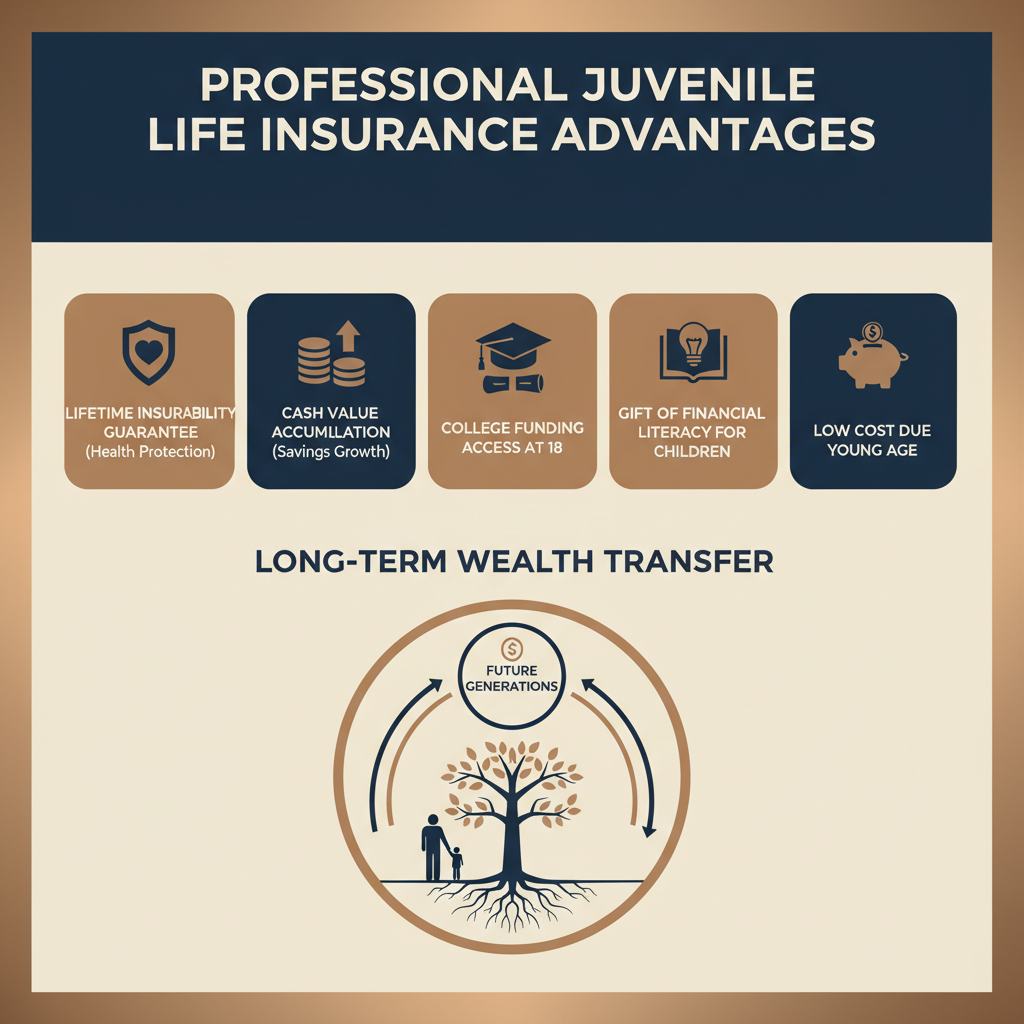
While the death benefit provides protection against the unthinkable, juvenile life insurance is primarily purchased for living benefits. First, it guarantees lifelong insurability — the child will always have coverage even if they develop serious health conditions later in life. This is invaluable protection against future uninsurability. Second, the cash value builds over decades, creating a substantial financial asset by adulthood. A policy purchased at birth can accumulate significant cash value by college age. Third, it teaches children financial responsibility — they learn about insurance, savings, and long-term planning. Fourth, premiums are locked in at the lowest possible rate — a child's policy costs a fraction of what the same coverage would cost as an adult. Fifth, the cash value provides flexible funding for major life milestones: college expenses, wedding costs, first home down payment, or business startup capital. Sixth, it's an excellent gift from grandparents that provides lasting value far beyond toys or clothes. Many parents wish they had purchased juvenile insurance for their children and regret missing the opportunity to lock in such low rates and guaranteed insurability.
How Does Cash Value Accumulate?
Juvenile policies build cash value just like adult whole life insurance, but with a significant advantage: decades of growth time. A portion of each premium goes to the cost of insurance (very low for children), while the remainder builds cash value. The cash value earns a guaranteed minimum interest rate plus potential dividends if the company is mutual. Because children's policies are typically held for 50-80 years, the cash value has exceptional time to compound. A $25,000 policy purchased at birth might accumulate $15,000-$30,000 in cash value by age 18, and $50,000-$100,000+ by retirement age, depending on premium structure and dividend performance. The policy owner can access cash value through loans or withdrawals for any purpose — college tuition is a common use, but funds can also support a first home purchase, wedding expenses, or business startup. Unlike 529 college savings plans that must be used for education, juvenile life insurance cash value is completely flexible. The cash value growth is tax-deferred, and if structured properly, can be accessed tax-free through policy loans. This makes juvenile insurance a versatile financial planning tool.
What About Insurability?
Guaranteed insurability is arguably the most valuable benefit of juvenile life insurance. When a child has their own policy, they're guaranteed to have life insurance coverage for life, regardless of future health developments. If the child later develops diabetes, cancer, heart disease, mental health conditions, or any other serious illness, they still have coverage that can't be cancelled. They can also purchase additional coverage on their own policy without medical underwriting through rider options or by purchasing new policies as adults. This is invaluable because health conditions can make life insurance unaffordable or unavailable later in life. Consider a child who develops type 1 diabetes at age 10 — as an adult, they'd face significantly higher premiums or might be declined entirely for traditional life insurance. But with a juvenile policy purchased before diagnosis, they have permanent coverage locked in. The policy can be transferred to the child at age 18-21 (depending on state), and they assume ownership and premium payments. Even if they never need the death benefit, having guaranteed insurability provides peace of mind and financial flexibility throughout their life.
Can Grandparents Purchase Policies?
Yes, grandparents commonly purchase juvenile life insurance for grandchildren, and it makes an excellent gift. Grandparents must have insurable interest in the grandchild (which they typically do as family members) and must be the policy owner initially. The grandparents pay premiums and control the policy until transferring ownership to the grandchild or their parents at the appropriate age. This is a meaningful alternative to traditional gifts — instead of toys or clothes that are quickly outgrown, a life insurance policy provides lifelong value. Many grandparents purchase policies for all grandchildren as part of their estate planning strategy. Premiums are very affordable, making it feasible to cover multiple grandchildren. Some grandparents set up automatic premium payments as an ongoing gift. The policy can be structured so that grandparents pay premiums for a limited period (5-10 years) to build substantial cash value, then transfer ownership to the child or parents to continue payments. Grandparents can also use juvenile policies as part of inheritance planning — the cash value belongs to the grandchild, not the grandparents' estate, so it bypasses probate. This makes juvenile insurance both a loving gift and a smart estate planning tool.
What Happens When The Child Turns 18?
When the child reaches the age of majority (18-21 depending on state), ownership of the policy can be transferred to them. The process is simple — the current owner (parent or grandparent) submits an ownership change form to the insurance company. Once transferred, the young adult assumes all rights and responsibilities: they control beneficiary designations, can access cash value through loans or withdrawals, decide whether to continue premium payments, and can use the policy as collateral for loans. Some young adults continue the policy as a savings vehicle, letting cash value accumulate for future needs. Others use it strategically — taking loans for college, a first car, or wedding expenses. The important thing is that the policy belongs to them, providing financial flexibility at a critical life stage. If the young adult doesn't want to continue premium payments, they have options: surrender the policy for cash value, use accumulated cash value to pay premiums (paid-up status), or reduce the death benefit to lower premiums. Most financial advisors recommend keeping the policy due to the valuable lifelong insurability and decades of cash value growth ahead.

How Much Coverage Should I Buy?
Juvenile policy death benefits typically range from $10,000 to $50,000, though some carriers offer up to $100,000. The right amount depends on your goals and budget. For pure insurability protection with modest cash value, $10,000-$25,000 is common and very affordable ($10-$25/month). For more substantial cash value accumulation, $25,000-$50,000 provides better growth potential ($25-$50/month). If you're using the policy primarily for college funding or significant cash accumulation, $50,000-$100,000 maximizes the benefit ($50-$100/month). Remember that the death benefit is secondary for most juvenile policies — the living benefits (cash value and insurability) are the primary motivation. You can also purchase multiple smaller policies rather than one large policy, which provides flexibility and diversification. Some families buy a base policy at birth and add additional coverage on birthdays or holidays. Consider your overall financial picture — juvenile insurance should complement, not replace, college savings plans and other investments. The beauty of juvenile insurance is that even a small $10,000 policy provides the crucial insurability benefit, so any amount is better than none.
What Are The Costs?
Juvenile life insurance is remarkably affordable due to children's low mortality risk. A $25,000 whole life policy for a healthy child might cost: $10-15/month for an infant (0-1), $12-18/month for ages 2-5, $15-25/month for ages 6-10, $20-35/month for ages 11-15, and $25-45/month for ages 16-17. Premiums are locked in for life and never increase. Girls typically pay slightly less than boys. Smoker rates don't apply to children. These premiums are guaranteed and won't change regardless of health developments or age. Compared to adult life insurance, juvenile policies cost 75-90% less for the same death benefit. For example, a $50,000 policy for a 5-year-old might cost $20/month, while the same coverage for a 35-year-old could cost $40-60/month, and for a 50-year-old, $100-200/month. Many families find juvenile insurance fits easily into their budget, especially when purchased as a gift from grandparents. Some carriers offer family discounts when insuring multiple children. Payment frequencies vary — monthly, quarterly, semi-annual, or annual — with discounts for paying annually. The key is choosing a premium amount sustainable for the long term, as consistency maximizes cash value growth.
Can The Policy Be Used For College?
Yes, juvenile life insurance cash value is an excellent college funding resource. Unlike 529 plans that must be used for qualified education expenses, life insurance cash value is completely flexible. You can access the money through policy loans or withdrawals at any age, for any purpose, without penalties. Policy loans don't appear on FAFSA (Free Application for Federal Student Aid) as assets or income, so they don't reduce financial aid eligibility — a significant advantage over 529 plans and savings accounts. The cash value can fund tuition, room and board, books, computers, or living expenses. Because loans are repaid on your own schedule (or not at all), there's no pressure like student loan payments. The death benefit remains intact even with outstanding loans (though the loan balance is deducted from the payout). Some families use juvenile insurance as a complement to 529 plans — the 529 for qualified expenses and the life insurance for flexibility. Others use it as their primary college funding strategy, especially if they missed 529 opportunities. The cash value can also fund graduate school, professional certifications, or study abroad programs. This flexibility makes juvenile insurance a versatile education planning tool.
Is Juvenile Insurance A Good Investment?
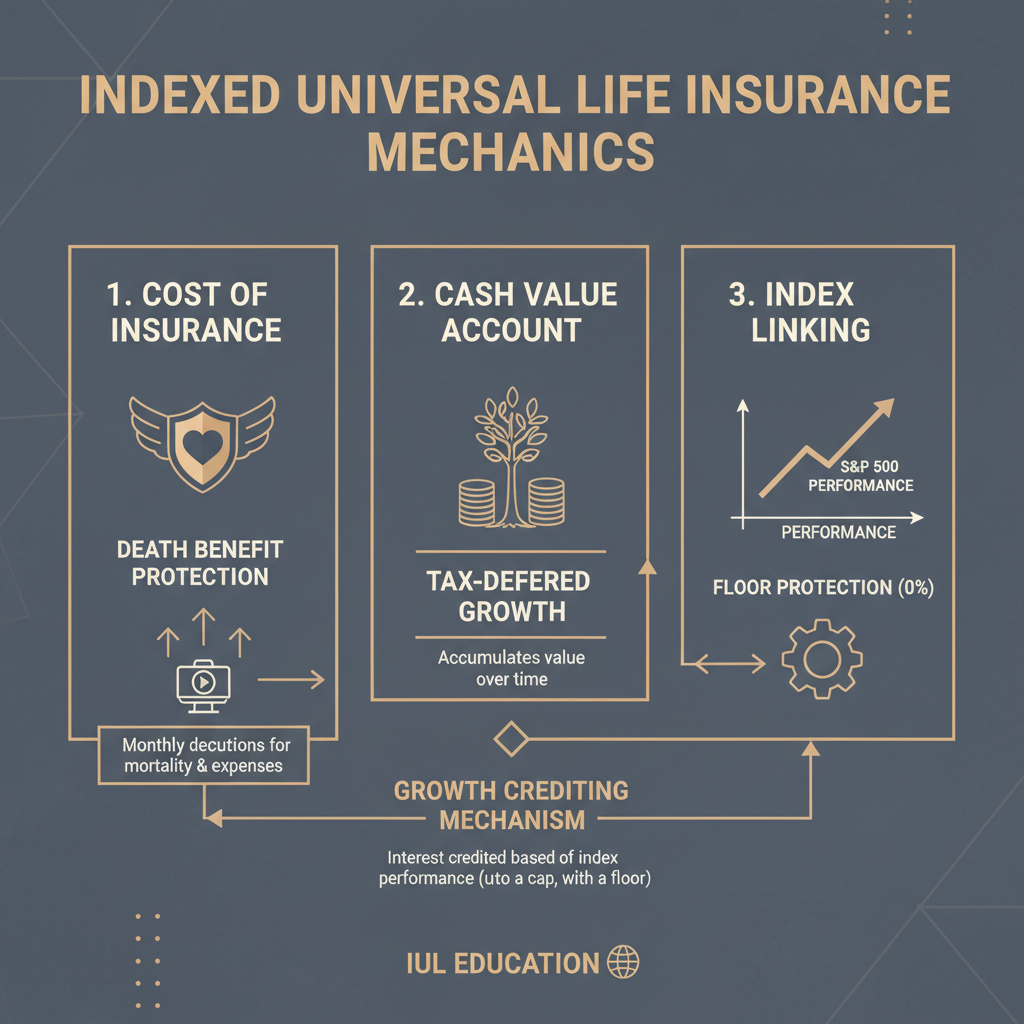
Juvenile life insurance shouldn't be viewed primarily as an investment, but rather as a hybrid protection-savings vehicle with unique benefits. The cash value grows at a guaranteed rate plus potential dividends, providing predictable, conservative growth without market risk. Returns typically range 3-5% annually, which is lower than potential stock market returns but with zero downside risk. The real value lies in the combination of benefits: guaranteed lifelong insurability (priceless if health issues develop), forced savings discipline (premiums build cash value automatically), tax-advantaged growth (tax-deferred accumulation, potential tax-free access), complete flexibility (use funds for any purpose), and creditor protection (in many states, life insurance cash value is protected from lawsuits). For families who have already maxed out retirement accounts and 529 plans, juvenile insurance provides additional tax-advantaged savings. For families who struggle with savings discipline, the required premium creates forced savings that builds wealth over time. The best perspective is that juvenile insurance is a foundational financial planning tool — not a get-rich-quick investment, but a stable, guaranteed asset that provides multiple benefits over a lifetime. When viewed this way, it's an excellent addition to a comprehensive financial plan.