Consumer Education
Medicare Advantage (Part C)
Compare Medicare Advantage Plans in Your Area
Enter your ZIP code to see all available Medicare Advantage plans in your area, compare benefits, and check if your doctors are in-network.
Shop Medicare Advantage Options Here →Medicare Advantage (Part C) Plans and Benefits Guide 2026
Medicare Advantage offers an all-in-one alternative to Original Medicare, often including prescription drugs, dental, vision, and more. Learn if it\'s the right choice for you.
Medicare Advantage: Your Questions Answered
What is Medicare Advantage (Part C)?
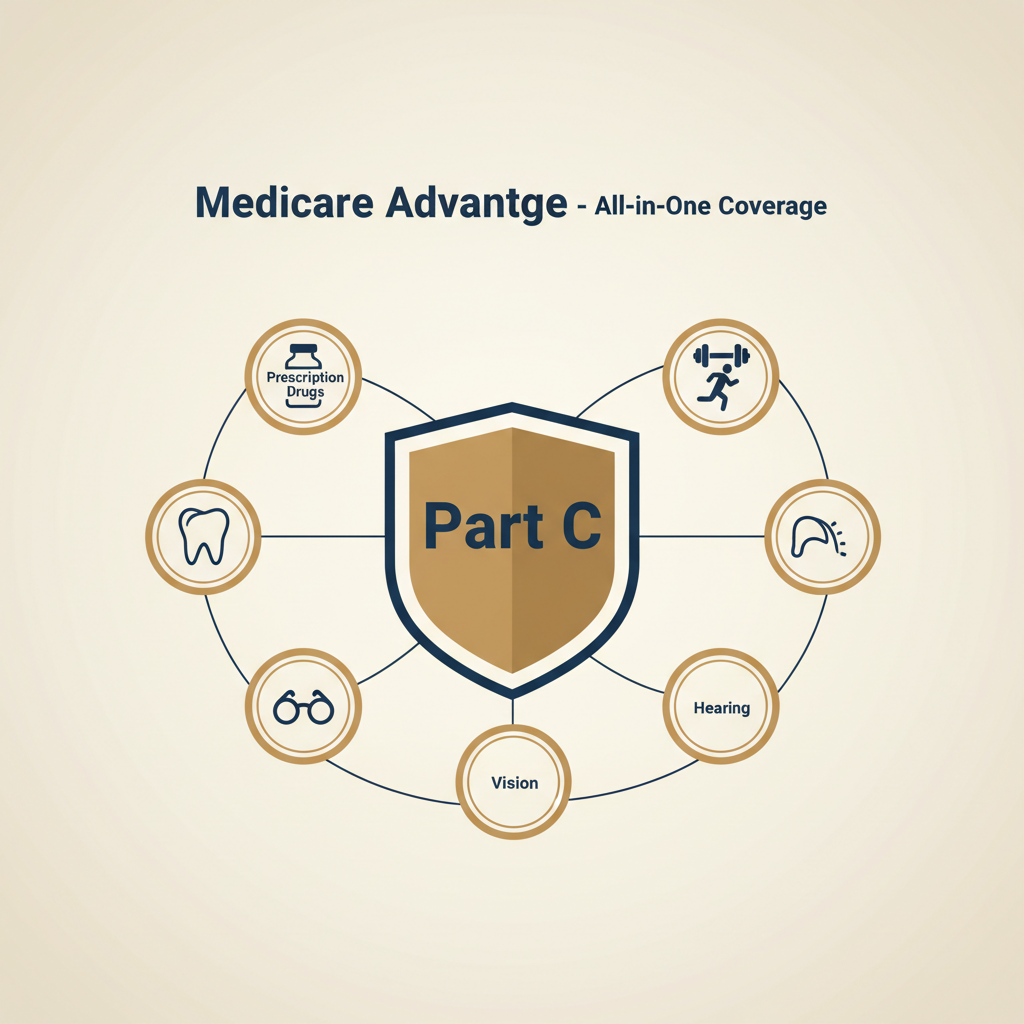
- Definition: Medicare Advantage is an all-in-one alternative to Original Medicare offered by private insurance companies approved by Medicare.
- Replaces Original Medicare: When you enroll in Medicare Advantage, it replaces your Parts A and B. The plan becomes your primary coverage.
- Comprehensive Coverage: Most Medicare Advantage plans include Part D prescription drug coverage plus extra benefits like dental, vision, hearing, fitness memberships (SilverSneakers), and transportation to medical appointments.
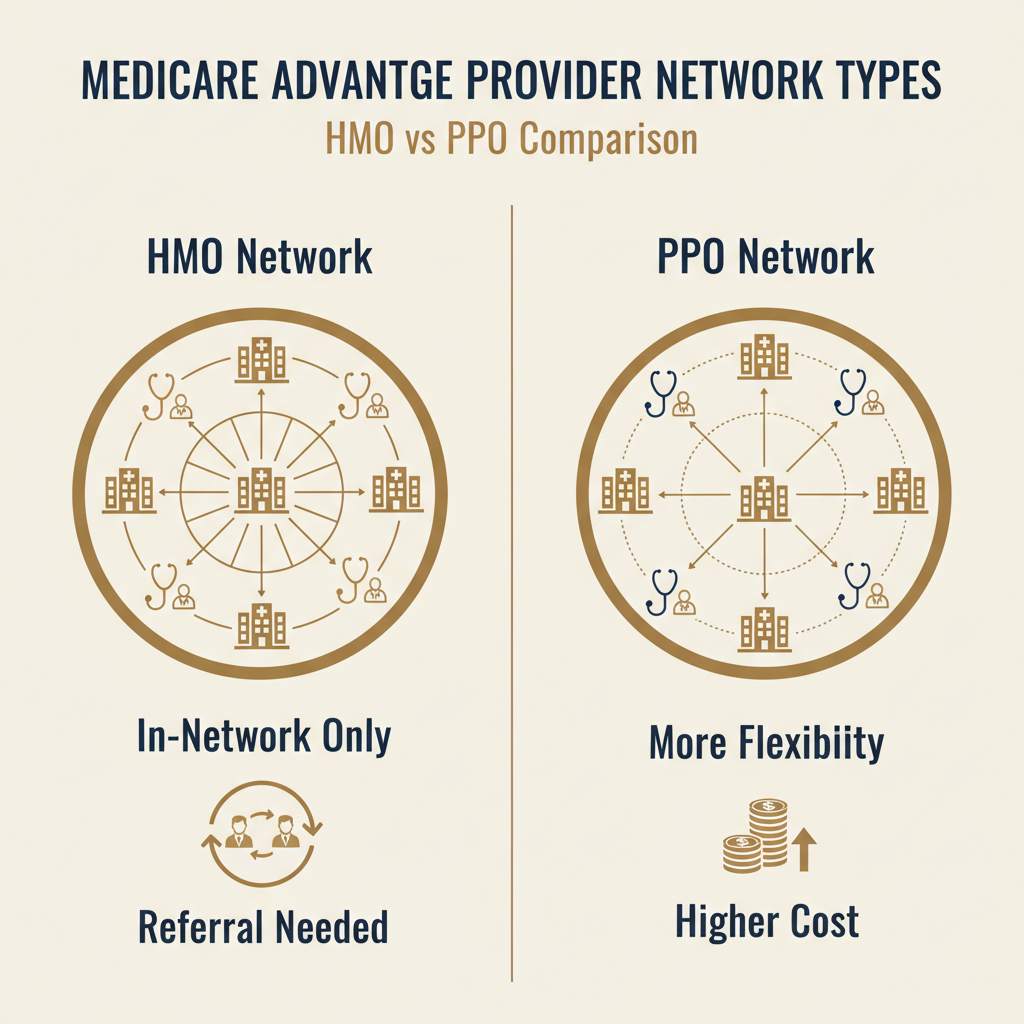
- Network-Based: Most plans are HMOs or PPOs with provider networks. HMOs require you to use in-network doctors and get referrals for specialists. PPOs offer more flexibility but cost more for out-of-network care.
- Out-of-Pocket Maximum: Unlike Original Medicare, Medicare Advantage plans have an annual out-of-pocket maximum (capped at $6,700 for in-network care in 2026), protecting you from catastrophic costs.
What is the difference between Medicare Advantage and Original Medicare?
- Structure: Original Medicare is government-run fee-for-service insurance (Parts A and B). Medicare Advantage is private insurance that replaces Original Medicare.
- Provider Access: Original Medicare lets you see any doctor nationwide who accepts Medicare—no networks, no referrals. Medicare Advantage usually restricts you to a network and may require referrals.
- Costs: Original Medicare has no annual out-of-pocket maximum. Medicare Advantage has a cap on out-of-pocket costs but may have higher per-service copays.
- Benefits: Original Medicare doesn't include drug, dental, vision, or hearing coverage. Medicare Advantage often includes these extras.
- Prior Authorization: Medicare Advantage plans often require prior authorization for certain services, while Original Medicare generally does not.

What are Medicare Advantage networks?
- HMO (Health Maintenance Organization): Most common type. You must use in-network doctors and hospitals (except emergencies). You typically need a referral from your primary care physician to see specialists. Premiums are usually lower, but flexibility is limited.
- PPO (Preferred Provider Organization): More flexibility. You can see out-of-network providers but pay significantly more. Referrals usually not required. Premiums tend to be higher than HMOs.
- HMO-POS (Point of Service): Hybrid plans that work like HMOs but allow limited out-of-network coverage for certain services.
- PFFS (Private Fee-for-Service): These plans don't have networks but determine how much they'll pay providers. You can see any Medicare-approved provider who accepts the plan's payment terms.
- Key Point: Always verify your current doctors and hospitals are in-network before enrolling. Networks can change annually.
How much does Medicare Advantage cost?
- Part B Premium: You must continue paying your Medicare Part B premium (typically $174.70/month in 2026, but varies by income) in addition to any Medicare Advantage premium.
- Plan Premiums: Many Medicare Advantage plans have $0 premiums beyond Part B. Others range from $20–$100+/month depending on benefits and location.
- Copays and Coinsurance: You'll pay copays for doctor visits ($0–$50), specialist visits ($0–$100), ER visits ($100–$500), hospital stays ($300–$400/day), and prescriptions (varies by drug tier).
- Out-of-Pocket Maximum: All plans have an annual cap on out-of-pocket costs for Part A and B services (maximum $6,700 for in-network care in 2026, but many plans have lower limits).
- Trade-Off: Lower monthly premiums but higher costs when you use care, compared to Medigap.
Does Medicare Advantage cover prescription drugs?
- Most Plans Include Part D: The majority of Medicare Advantage plans include prescription drug coverage (called MAPD plans). This simplifies your coverage—medical and drugs in one plan.
- Formulary Tiers: Plans organize drugs into tiers. Tier 1 (generics) costs least, Tier 2 (preferred brands) costs more, Tier 3 (non-preferred brands) costs more, and Tier 4/5 (specialty drugs) costs most.
- Prior Authorization: Some drugs require prior authorization or step therapy (trying cheaper alternatives first) before the plan will cover them.
- Pharmacy Networks: Plans have preferred pharmacies with lower copays. Using out-of-network pharmacies may cost more or not be covered.
- Coverage Gap: Part D coverage gap ("donut hole") rules apply. In 2026, you'll pay 25% of drug costs in the gap, with a $2,000 annual out-of-pocket cap.
Can I change Medicare Advantage plans?
- Annual Enrollment Period (AEP): Every year from October 15 to December 7, you can switch from one Medicare Advantage plan to another, switch to Original Medicare, or join Medicare Advantage for the first time.
- Medicare Advantage OEP: If you're already in Medicare Advantage, you can make one change from January 1 to March 31—either switch to a different Advantage plan or return to Original Medicare.
- Special Enrollment Periods: You may qualify to change plans outside standard periods if you move out of your plan's service area, lose employer coverage, qualify for Medicaid, or your plan changes its contract with Medicare.
- First-Year Trial Right: If you try Medicare Advantage for the first time, you have 12 months to switch back to Original Medicare and buy any Medigap policy sold in your state (guaranteed issue).
What extra benefits do Medicare Advantage plans offer?
- Dental: Most plans include routine dental (cleanings, exams, X-rays). Some cover major services (fillings, extractions, dentures) with annual maximums ($1,000–$2,000).
- Vision: Routine eye exams and eyeglasses or contact lenses (typically $100–$300 allowance every 1–2 years).
- Hearing: Hearing exams and hearing aids (often $500–$1,500 per ear every 2–3 years).
- Fitness: Free gym memberships through SilverSneakers, Renew Active, or Silver&Fit programs.
- Transportation: Non-emergency medical transportation to doctor appointments.
- Over-the-Counter Allowance: Quarterly allowance ($50–$150) for OTC health products.
- Note: Benefits vary significantly by plan—review the Summary of Benefits carefully.
Are there downsides to Medicare Advantage?
- Network Restrictions: You're generally limited to in-network providers (except emergencies). Seeing out-of-network doctors can cost significantly more or not be covered.
- Referrals Required: HMOs require referrals from your primary care physician to see specialists.
- Prior Authorization: Plans often require approval before covering certain services, medications, or procedures—potentially delaying care.
- Plan Changes: Benefits, premiums, formularies, and provider networks can change every year. Your doctor might leave the network.
- Travel Limitations: Most plans don't cover care outside your plan's service area except for emergencies—not ideal for snowbirds or frequent travelers.
- Out-of-Pocket Costs: While there's an annual maximum, frequent medical care can still cost thousands in copays and coinsurance.
Who should choose Medicare Advantage?
- Choose Medicare Advantage If: You want lower monthly premiums (many plans are $0 premium beyond Part B). You're comfortable using a network of doctors and hospitals. You want extra benefits like dental, vision, hearing, and fitness memberships. You take prescription drugs and want them included in one plan. You prefer an annual out-of-pocket maximum. You don't travel extensively outside your plan's service area. You're generally healthy and don't need frequent specialist care.
- Financial Trade-Off: Lower fixed costs (premiums), but higher variable costs (per-service copays/coinsurance) compared to Medigap.
Who should avoid Medicare Advantage?
- Consider Medigap Instead If: You want maximum flexibility to see any Medicare-accepting provider nationwide without referrals. You travel frequently or live in multiple states (snowbird). You prefer predictable costs—higher monthly premiums but minimal out-of-pocket when you use care. You have chronic conditions requiring frequent specialist visits or expensive treatments. You want to avoid network restrictions and prior authorizations. You can afford higher premiums ($100–$300+/month for Medigap + Part D).
- Future Flexibility: Remember, switching from Advantage to Medigap later may require medical underwriting unless you have guaranteed-issue rights. It's easier to switch from Medigap to Advantage than vice versa.
Find Your Perfect Medicare Advantage Plan
With hundreds of Medicare Advantage plans available, finding the right one can be overwhelming. Our free tool lets you compare all plans in your area side-by-side, check if your doctors are in-network, and see exactly what your medications will cost.