Consumer Education
Term Life Insurance
Term insurance provides coverage for a specific term or length of time; usually 10, 20, or 30 years. It has no cash value, like a permanent policy. However, a Term policy may be renewed for another term when the initial term concludes.
Term Life Insurance Video
What Is Term Life Insurance?
Term life insurance is the simplest form of life insurance, providing pure death benefit protection for a specified period — typically 10, 20, or 30 years. If you die during the term, your beneficiaries receive the death benefit tax-free. If you outlive the term, the policy expires with no value, similar to auto or home insurance. Term insurance has no cash value or investment component — it's purely protection. This simplicity makes term insurance very affordable, especially for young, healthy individuals. Premiums are level during the term but increase dramatically at renewal. Term is ideal for temporary needs: replacing income during working years, paying off a mortgage, funding children's education, or covering business debts. Most financial advisors recommend term insurance for temporary protection needs because it provides maximum death benefit per premium dollar. However, approximately 99% of term policies never pay a death benefit because people let them lapse or outlive the term. This makes term insurance best suited for those who need affordable, temporary coverage with the understanding that it's a "use it or lose it" product.
How Long Should My Term Be?
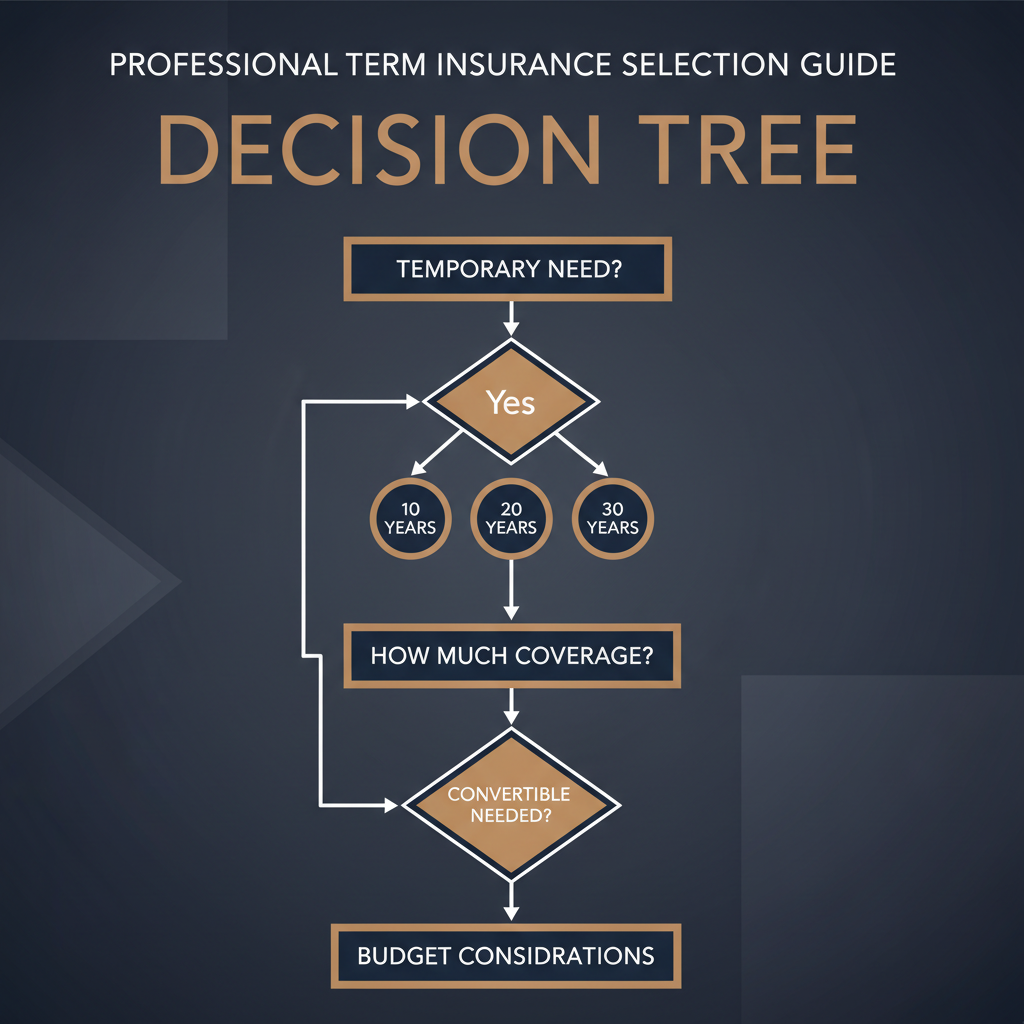
Choosing the right term length depends on how long you need coverage. Common strategies include: matching your mortgage term (30-year term for a 30-year mortgage), covering until children are financially independent (20-year term for young children), replacing income until retirement (term ending at age 65-70), or covering business loans or partnership agreements. The key is identifying when your dependents will no longer need financial protection. Young families often choose 20 or 30-year terms to cover the years when children are dependent and mortgage payments are ongoing. Empty nesters might choose 10-year terms to cover final working years. Some people layer multiple policies — a 30-year term for mortgage and a 20-year term for income replacement. Consider your specific obligations: if you have a 15-year mortgage and teenagers, a 15 or 20-year term might suffice. If you have young children and a 30-year mortgage, a 30-year term provides comprehensive coverage. It's generally better to choose a longer term than you think you need — you can always convert or let it expire early, but extending coverage after health declines can be impossible or prohibitively expensive.
What Does Term Insurance Cost?
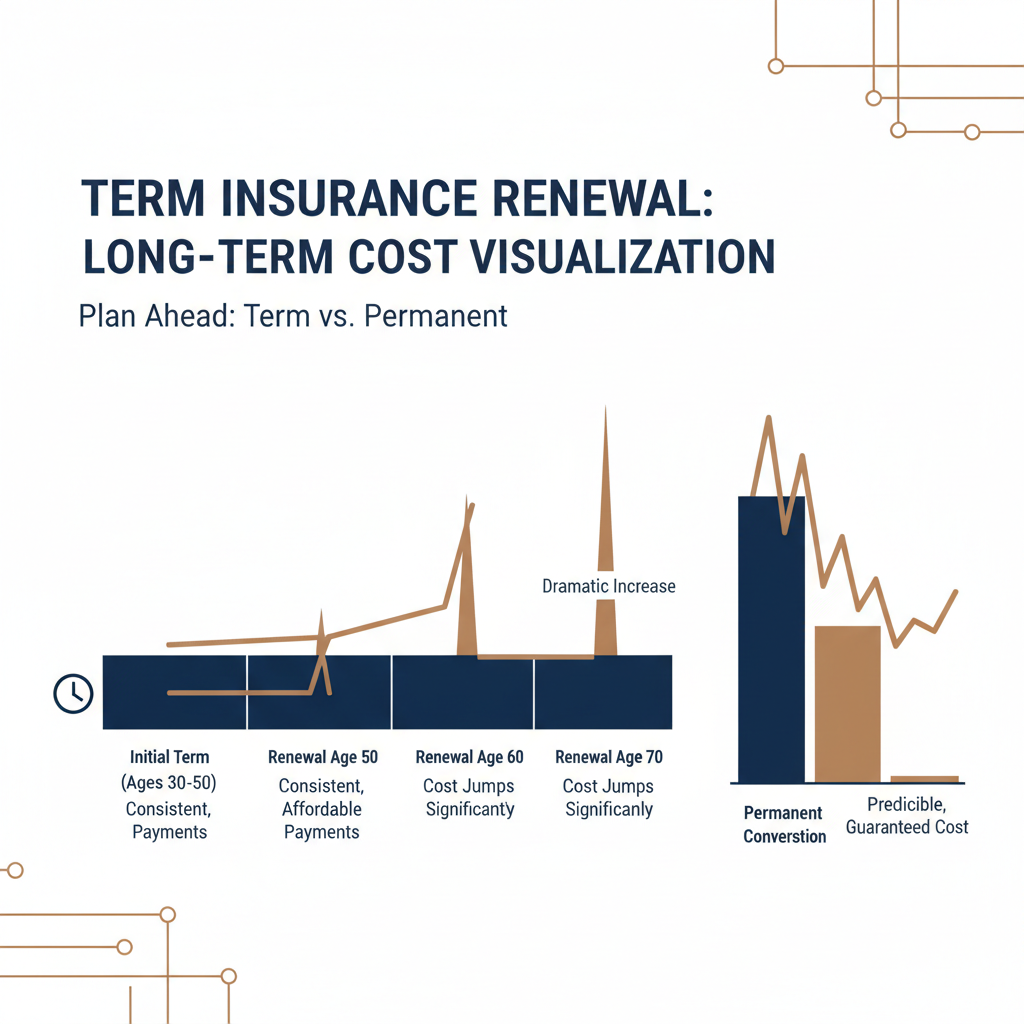
Term insurance is the most affordable life insurance option, especially for young, healthy individuals. Premiums depend on age, health, coverage amount, and term length. As rough guidelines: a healthy 30-year-old might pay $20-30/month for $500,000 of 20-year term coverage. A 40-year-old might pay $35-50/month for the same coverage. A 50-year-old might pay $80-150/month. Men typically pay 20-30% more than women due to shorter life expectancy. Smokers pay 2-3 times higher premiums than non-smokers. Premiums are level during the term but increase significantly at renewal — a policy that cost $30/month at age 30 might cost $150-300/month when renewed at age 60. This is why many people let term policies lapse at renewal. Term insurance provides maximum death benefit per premium dollar, making it ideal for those needing large coverage amounts on a budget. However, the low cost comes with trade-offs: no cash value, no lifelong coverage, and the risk of becoming uninsurable if health declines before the term ends. Many financial planners recommend buying term and investing the difference, but this strategy requires discipline to actually invest the savings.
Is Term Insurance Convertible?
Many term policies include a conversion rider that allows you to convert to permanent insurance (whole life or universal life) without medical underwriting. This is invaluable if your health declines during the term — you can lock in permanent coverage regardless of new health conditions. Conversion privileges typically expire at age 65-70 or after 10-20 years, depending on the policy. You can usually convert the full term amount or just a portion. The permanent policy premium will be based on your current age (higher than if purchased originally) but your original health class. For example, if you bought term at age 30 as a preferred non-smoker but developed diabetes at age 45, you can convert at age 45 using the preferred non-smoker rate — a huge advantage. Some policies offer "conversion credit," applying a portion of term premiums toward the permanent policy. Conversion provides a safety net — you start with affordable term coverage but retain the option to secure permanent insurance if circumstances change. Not all term policies are convertible, so ask about this feature when shopping. Even if you don't plan to convert, having the option provides valuable flexibility and protection against future uninsurability.
What Happens When Term Expires?
When your term policy expires, you have several options, though none are ideal. First, you can let the policy lapse — coverage ends, and you receive nothing. This is what happens to most term policies. Second, you can renew the policy, but premiums increase dramatically based on your current age. A policy that cost $30/month at age 30 might cost $200-400/month when renewed at age 60. These annual renewable term rates can become prohibitively expensive. Third, if your policy has a conversion rider and you're within the conversion window, you can convert to permanent insurance. Fourth, you can apply for a new term policy, but you'll be underwritten at your current age and health. If you've developed health conditions, you may face higher premiums or denial. This is the biggest risk of term insurance — becoming uninsurable when you still need coverage. Many people assume they'll just buy new coverage when their term expires, but health changes can make this impossible or unaffordable. This is why some financial planners recommend permanent insurance for needs that extend beyond a specific term. If you anticipate needing coverage beyond the initial term, consider buying a longer term initially or purchasing permanent insurance from the start.
How Much Term Coverage Do I Need?
Determining term coverage amount requires analyzing your financial obligations and dependents' needs. Common approaches include:
- Income replacement — 10-15 times your annual income to replace earnings during working years.
- DIME method — Debt (mortgage, loans) + Income replacement (years needed × income) + Mortgage balance + Education costs for children.
- Needs analysis — calculating specific expenses: final expenses ($15,000-25,000), outstanding debts (mortgage, car loans, credit cards), income replacement (years until retirement × annual income minus spouse's income), children's education ($50,000-200,000 per child), and any special needs care. A typical young family might need $500,000-$1,000,000 to cover mortgage payoff, 10 years of income replacement, and college funding. Single individuals without dependents may need little or no life insurance. Consider both immediate needs (final expenses, debt payoff) and ongoing needs (living expenses, education). Also factor in existing resources: savings, investments, retirement accounts, and spouse's income. Many people are underinsured because they focus on affordability rather than actual needs. Term insurance is affordable, so it's often better to have slightly too much than too little. Review coverage every 3-5 years or after major life events to ensure it remains adequate.
What Is Level Term Insurance?
Level term insurance is the most common type of term policy, featuring both a level death benefit and level premiums throughout the term. If you purchase a 20-year, $500,000 level term policy, your beneficiaries receive $500,000 whether you die in year 1 or year 20, and your premium remains exactly the same for all 20 years. This predictability makes level term ideal for budgeting and long-term planning. The premium is calculated to average the increasing cost of insurance over the term — you overpay slightly in early years and underpay in later years, creating level payments. This contrasts with annual renewable term (ART), where premiums start lower but increase every year as you age. Level term provides the best value for those who want guaranteed coverage for a specific period. Most level term policies are guaranteed level — the insurance company cannot increase your premium or reduce your death benefit during the term, regardless of health changes or claims experience. This guarantee is backed by the company's reserves and state guaranty associations. Level term is the standard recommendation for families needing temporary protection with predictable costs.
Can Term Insurance Be Cancelled?
Term insurance can be cancelled by either you or the insurance company, but with important restrictions. You can cancel anytime by stopping premium payments or formally surrendering the policy. Since term has no cash value, there's no surrender value — you simply stop paying and coverage ends. Some policies have a free-look period (typically 10-30 days) allowing cancellation with full premium refund. The insurance company's ability to cancel is heavily restricted. During the first two years, they can rescind the policy if you misrepresented material facts on the application (like lying about health conditions or smoking). This is why honest disclosure is critical. After two years, most policies become incontestable — the company cannot cancel or rescind except for non-payment of premiums. Your premium is guaranteed, and coverage cannot be cancelled due to health changes, claims, or occupation changes. This guarantee is one of term insurance's greatest strengths. Even if you develop cancer or a heart condition, your coverage remains in force as long as premiums are paid. State insurance departments regulate policy cancellations strictly to protect consumers. Always review the policy's guarantee provisions and understand your rights.
What Is Decreasing Term Insurance?
Decreasing term insurance is a variation where the death benefit decreases over time while premiums remain level. The most common use is mortgage protection — the death benefit matches the declining mortgage balance. For example, a 30-year decreasing term policy might start at $300,000 and decrease to zero over 30 years, matching a typical mortgage amortization. Premiums are lower than level term because the insurer's risk decreases over time. Decreasing term is ideal for covering specific declining obligations like mortgages, business loans, or other debts that reduce over time. However, it's less flexible than level term — if your needs change or the debt is paid off early, you're left with a policy designed for a different purpose. Most financial advisors recommend level term over decreasing term because it provides more flexibility. You can always reduce coverage later if needed, but you can't increase decreasing term coverage without new underwriting. Decreasing term is also called "mortgage protection insurance" when marketed specifically for home loans. Some lenders offer decreasing term at closing, but shopping independently often yields better rates and more flexible terms. Understanding the difference between level and decreasing term helps you choose the right product for your specific needs.
Should I Buy Term Or Permanent Insurance?
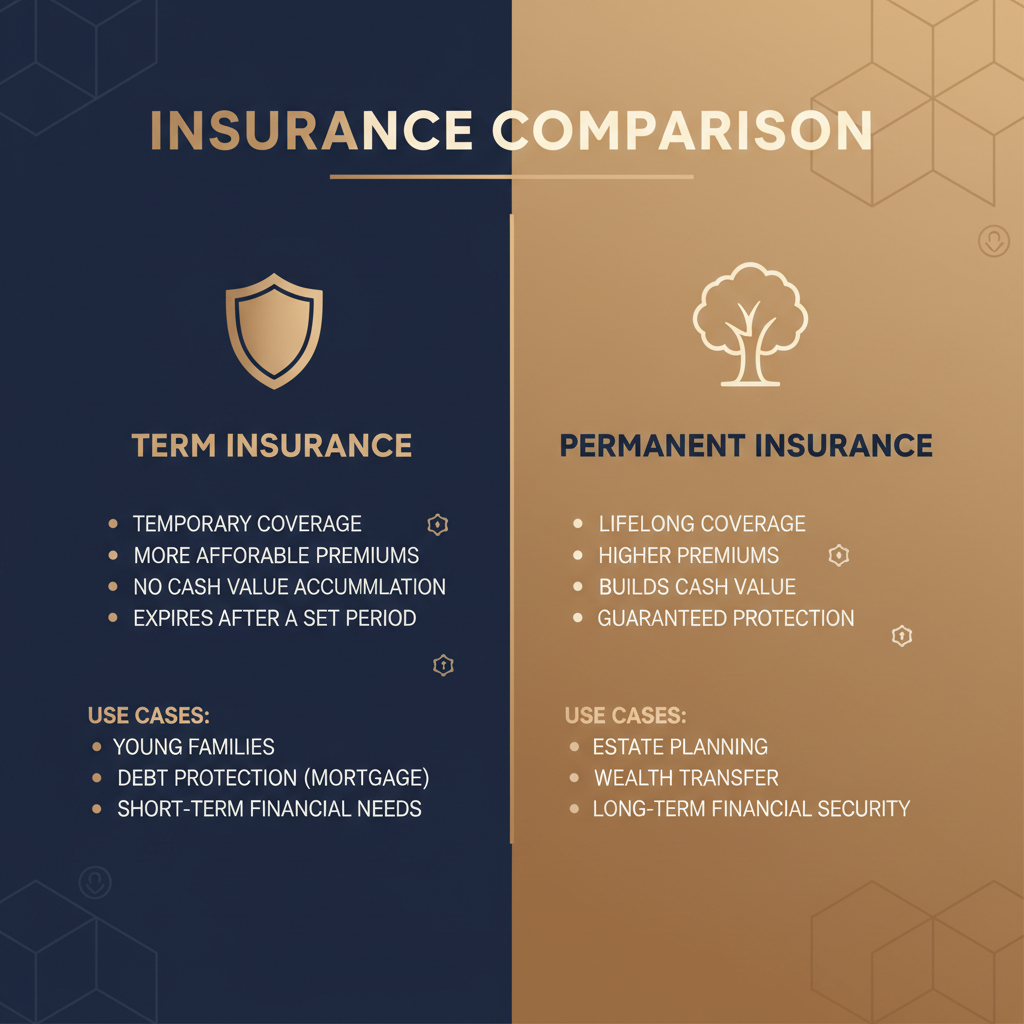
The term vs. permanent debate depends on your specific needs and goals. Choose term insurance if: you need temporary coverage (mortgage protection, income replacement during working years), want maximum death benefit per premium dollar, have limited budget but need substantial coverage, plan to invest the premium difference separately, or only need coverage for a specific time period. Choose permanent insurance (whole life, universal life) if: you need lifelong coverage (final expenses, estate taxes, special needs dependents), want cash value accumulation, desire forced savings discipline, have maxed out other tax-advantaged accounts, want guaranteed insurability regardless of future health, or need coverage for estate planning or wealth transfer. Many families benefit from having both — term for temporary, high-need periods and permanent for lifelong needs. The "buy term and invest the difference" strategy works well for disciplined savers but fails for those who don't actually invest the savings. Permanent insurance provides guarantees that term cannot: lifelong coverage, cash value, and protection against becoming uninsurable. Consider your time horizon, budget, financial discipline, and specific needs. A common approach is purchasing permanent insurance for final expenses and estate needs, plus term insurance for income replacement and debt coverage during working years. This hybrid strategy provides comprehensive protection at an affordable cost.