Consumer Education
Under Age 65 Health Insurance
Health insurance for individuals under age 65 provides essential medical coverage before Medicare eligibility. These plans offer comprehensive protection including doctor visits, hospital stays, prescriptions, and preventive care to safeguard your health and finances.
What Health Insurance Options Exist Under Age 65?
Individuals under 65 have several health insurance options:
- Employer-sponsored insurance — coverage through your job or a spouse's job, typically with premium sharing and network restrictions.
- ACA Marketplace plans — individual policies purchased through Healthcare.gov or state exchanges, with income-based subsidies and guaranteed issue (no health underwriting).
- Medicaid — government program for low-income individuals, with eligibility varying by state.
- Individual private insurance — fully underwritten plans purchased outside the Marketplace, requiring health qualification but often offering broader networks and lower premiums for healthy individuals.
- Short-term medical — temporary coverage (3-36 months depending on state) for those between jobs or waiting for other coverage, with limited benefits and health underwriting.
- Health sharing ministries — faith-based cost-sharing arrangements (not insurance) with lower monthly costs but no guaranteed payment. The best option depends on your health, income, family size, and need for flexibility.
What Is ACA/Obamacare Marketplace Insurance?
ACA (Affordable Care Act) Marketplace insurance, commonly called Obamacare, is individual health insurance sold through government exchanges (Healthcare.gov or state-run marketplaces). Key features include:
- Guaranteed issue — insurers must accept all applicants regardless of health conditions or pre-existing conditions.
- Essential health benefits — all plans cover 10 categories including hospitalization, prescriptions, maternity care, mental health, and preventive services.
- Premium subsidies — income-based tax credits reduce monthly premiums for households earning 100-400% of federal poverty level (approximately $14,000-$60,000 for individuals or $29,000-$125,000 for families of four).
- No annual/lifetime limits — plans cannot cap total benefits.
- Dependent coverage to age 26 — children can stay on parents' plans until age 26. ACA plans are categorized as Bronze (60% coverage), Silver (70%), Gold (80%), or Platinum (90%), indicating the percentage of costs the plan pays. Open enrollment runs November-January annually, though qualifying life events (job loss, marriage, birth, move) trigger special enrollment periods.
What Are Fully Underwritten Health Plans?
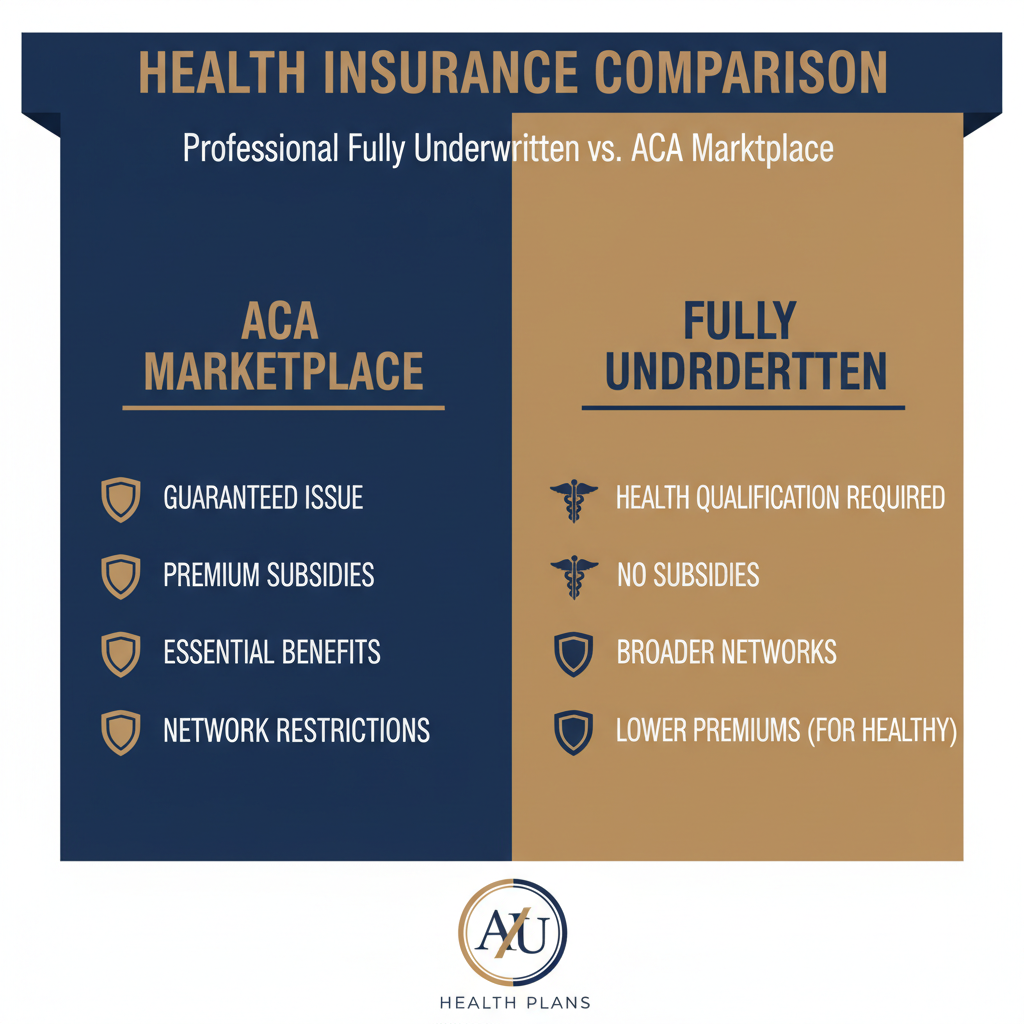
Fully underwritten health plans are individual insurance policies purchased outside the ACA Marketplace that require medical underwriting and health qualification. Unlike ACA plans, these policies:
- Require health questions and medical records review — insurers can deny coverage or exclude pre-existing conditions based on health history.
- Often have lower premiums for healthy individuals — since risk is assessed individually, healthy applicants pay less than ACA community-rated premiums.
- May offer broader provider networks — some include PPO networks with national coverage, while ACA plans are often HMO/EPO with limited networks.
- Don't qualify for premium subsidies — purchased with after-tax dollars.
- Can be cancelled or non-renewed — insurers can change terms or discontinue policies. These plans are ideal for healthy individuals who don't qualify for ACA subsidies, want broader doctor choice, or need coverage outside ACA open enrollment. Common carriers include UnitedHealthcare, Blue Cross Blue Shield, Cigna, and Aetna. Working with an independent agent is crucial since underwriting guidelines vary significantly by carrier.
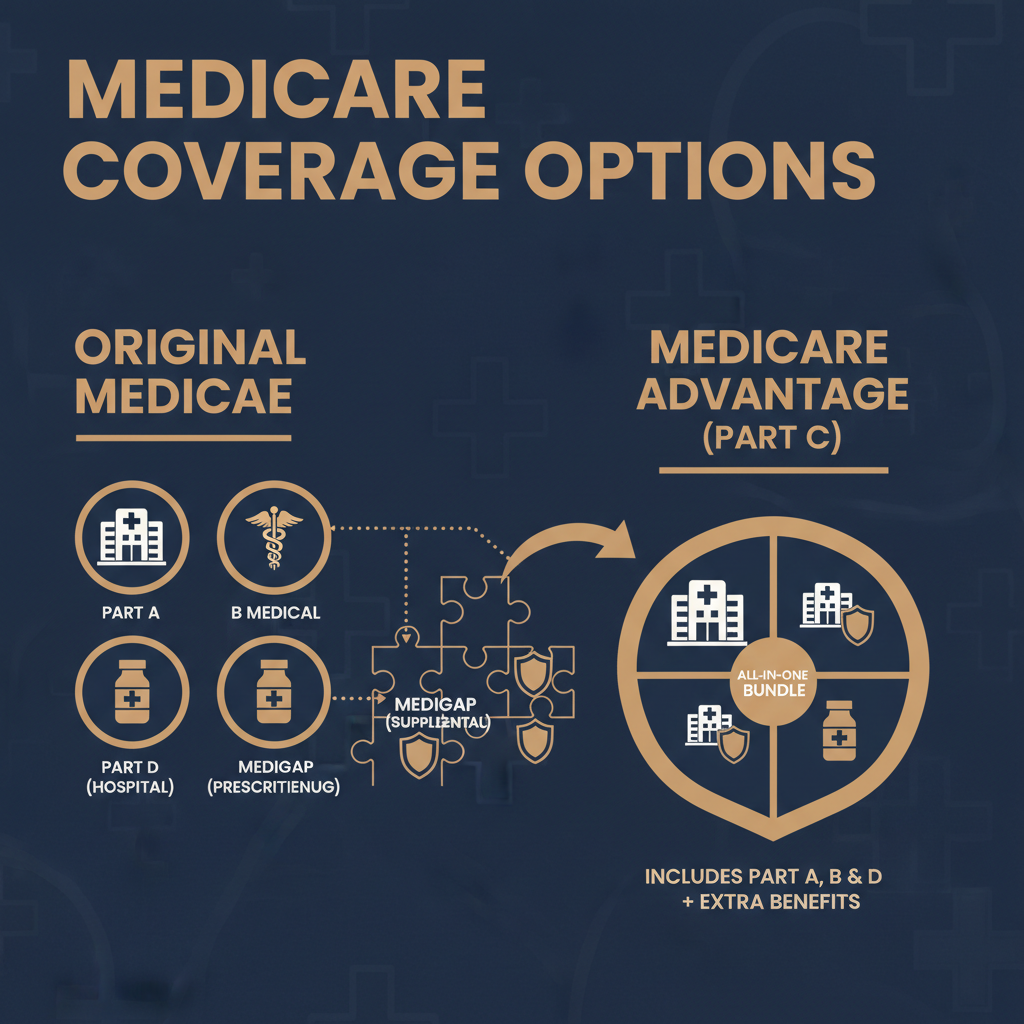
What Are The Enrollment Periods?
Health insurance enrollment is restricted to specific periods:
- Annual Open Enrollment — typically November 1 to January 15 for ACA Marketplace plans. Coverage starts January 1 if enrolled by December 15, or February 1 if enrolled later.
- Special Enrollment Periods (SEPs) — triggered by qualifying life events: loss of employer coverage, marriage, divorce, birth/adoption, permanent move, change in income affecting subsidy eligibility, gaining citizenship, leaving incarceration. SEPs typically last 60 days from the event.
- Medicaid/CHIP enrollment — available year-round for eligible individuals.
- Short-term medical — can be purchased anytime, though some states restrict availability.
- Fully underwritten individual plans — available year-round in most states, subject to underwriting approval. Missing open enrollment without a qualifying event means waiting until next year unless you qualify for Medicaid or short-term coverage. Document life events carefully — you'll need proof (marriage certificate, birth certificate, termination letter, utility bills for moves) to enroll during SEPs. Agents can help navigate enrollment timing and documentation requirements.
What Are Plan Metal Tiers?
ACA plans are categorized into metal tiers indicating coverage levels:
- Bronze (60% actuarial value) — lowest premiums, highest out-of-pocket costs. Plans pay 60% of average medical expenses; you pay 40%. Best for catastrophic protection if you're healthy and rarely use medical care.
- Silver (70% actuarial value) — moderate premiums and cost-sharing. Only tier offering cost-sharing reductions (CSRs) for households under 250% FPL, reducing deductibles and copays. Most popular tier due to balance of premium and out-of-pocket costs.
- Gold (80% actuarial value) — higher premiums, lower deductibles and copays. Plans pay 80% of costs. Ideal for those expecting regular medical expenses, prescriptions, or specialist visits.
- Platinum (90% actuarial value) — highest premiums, lowest out-of-pocket costs. Plans pay 90% of expenses. Best for those with significant ongoing medical needs. All tiers cover the same essential health benefits — the difference is cost-sharing structure. Bronze might have $8,000 deductibles, while Gold might have $500 deductibles. Choose based on expected healthcare usage: healthy individuals often prefer Bronze/Silver, while those with regular care needs benefit from Gold/Platinum.
What Is The Difference Between HMO, PPO, EPO, And POS?
Health plans use different network structures affecting provider choice and costs:
- HMO (Health Maintenance Organization) — requires selecting a primary care physician (PCP) who coordinates all care and provides referrals to specialists. No out-of-network coverage except emergencies. Lowest premiums but most restrictive. Common in ACA Marketplace plans.
- PPO (Preferred Provider Organization) — allows seeing any provider without referrals. In-network providers cost less; out-of-network care is covered (typically 60-70%) but at higher cost. Highest premiums but maximum flexibility. Common in fully underwritten individual plans and employer coverage.
- EPO (Exclusive Provider Organization) — no referrals needed, but no out-of-network coverage except emergencies. Middle ground between HMO and PPO in cost and flexibility.
- POS (Point of Service) — hybrid of HMO and PPO. Requires PCP and referrals for in-network care but allows out-of-network coverage at higher cost. Less common today. Network type significantly impacts costs and doctor choice. If you have preferred doctors, verify they're in-network before enrolling. PPOs are ideal for frequent travelers or those wanting specialist access without referrals. HMOs/EPOs work well for those comfortable with PCP coordination and staying in-network.
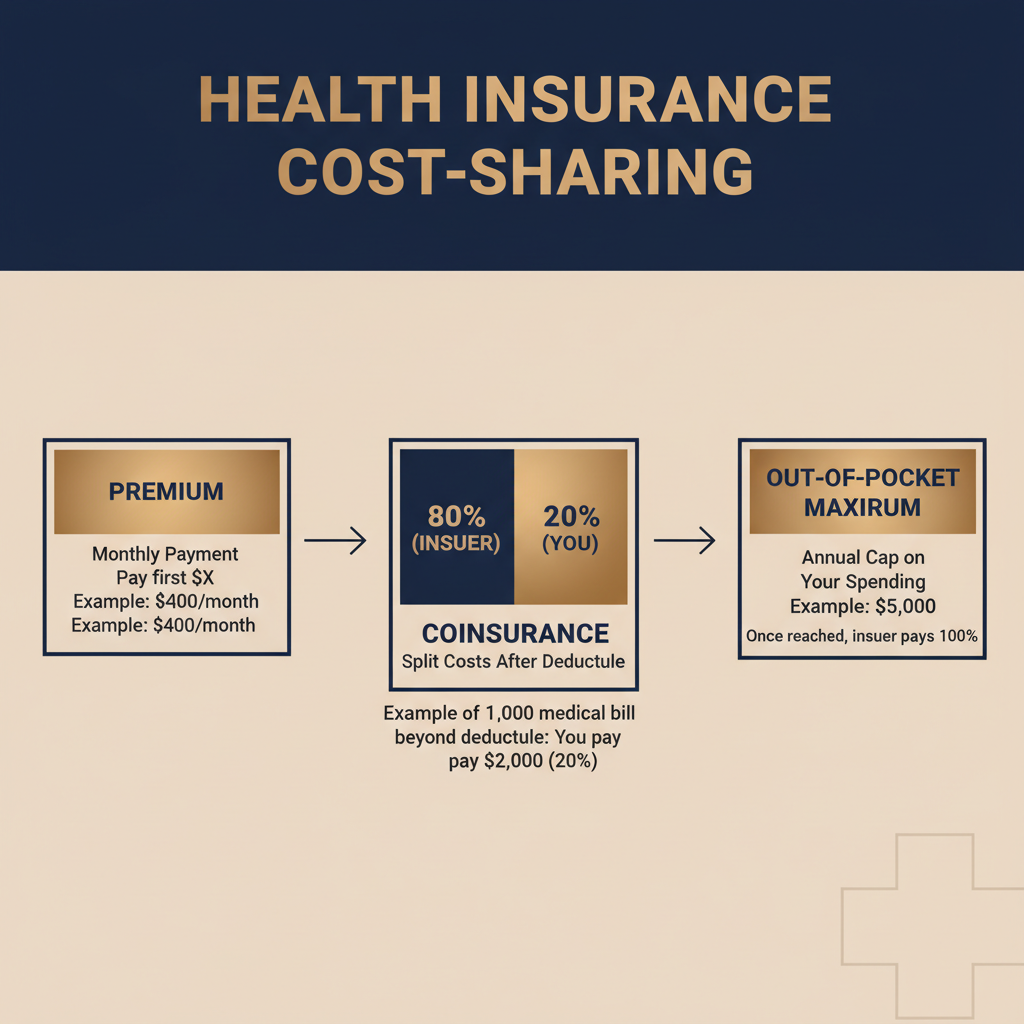
What Are Deductibles, Copays, And Out-Of-Pocket Maximums?
Understanding cost-sharing terms is crucial for comparing plans:
- Premium — monthly payment to maintain coverage, regardless of healthcare usage.
- Deductible — amount you pay annually before insurance starts covering most services. A $3,000 deductible means you pay first $3,000 of covered expenses. Preventive care is typically exempt and covered at 100% even before deductible.
- Copay — fixed amount per service (e.g., $30 doctor visit, $50 specialist, $15 prescription). Copays may apply before or after deductible depending on plan.
- Coinsurance — percentage you pay after deductible (e.g., 20% coinsurance means you pay 20%, insurance pays 80%).
- Out-of-pocket maximum — annual cap on your total costs (deductible + copays + coinsurance). For 2024 ACA plans, maximum is $9,450 individual/$18,900 family. Once reached, insurance pays 100% of covered services. Lower-premium plans typically have higher deductibles and out-of-pocket maximums. Calculate total annual cost: premium × 12 + expected out-of-pocket expenses. A $300/month plan with $8,000 deductible might cost more than a $500/month plan with $1,000 deductible if you use significant care.
Can I Keep My Current Doctors?
Whether you can keep current doctors depends on the plan's network:
- Check provider directories — before enrolling, search the insurance company's online provider directory for your doctors, hospitals, and specialists. Networks change annually, so verify each year during open enrollment.
- Understand network types — HMOs and EPOs have no out-of-network coverage (except emergencies), so your doctors must be in-network. PPOs allow out-of-network care at higher cost.
- Call the doctor's office — confirm they accept the specific plan you're considering. Insurance company directories aren't always accurate.
- Consider continuity of care — if you're in active treatment (pregnancy, cancer, chronic conditions), federal law requires plans to cover out-of-network providers at in-network rates for up to 90 days during transitions.
- Narrow networks — ACA Marketplace plans often have restricted networks to control costs, excluding major academic medical centers or certain specialists. Fully underwritten PPO plans typically offer broader networks. If keeping specific doctors is essential, choose plans based on network adequacy rather than premium alone. Losing access to trusted providers can outweigh premium savings.
What If I Have Pre-Existing Conditions?
Pre-existing condition protections vary by plan type:
- ACA Marketplace plans — cannot deny coverage, charge higher premiums, or exclude coverage for pre-existing conditions. All applicants pay the same premium regardless of health history. This is the ACA's most significant consumer protection.
- Fully underwritten individual plans — can deny coverage, exclude specific conditions, or charge higher premiums based on health history. Conditions like cancer, heart disease, diabetes, or recent surgeries often result in denial. Minor conditions may be approved with exclusions.
- Employer plans — cannot exclude pre-existing conditions under ACA rules, though some grandfathered plans have different provisions.
- Short-term medical — can deny coverage or exclude pre-existing conditions entirely.
- Medicaid — no pre-existing condition exclusions. If you have significant health issues, ACA Marketplace plans provide the most comprehensive protection. During open enrollment, you can enroll regardless of health status. Outside open enrollment, you need a qualifying life event unless you qualify for Medicaid. Some states have high-risk pools for those denied individual coverage, though these are less common post-ACA.