Consumer Education
Whole Life Insurance
This overview provides education on the most common permanent life insurance product in existence — a Whole Life Insurance policy! Come learn why these policies have endured and provide more death benefits than any other type of coverage.
Whole Life Insurance Video
What Is Whole Life Insurance?
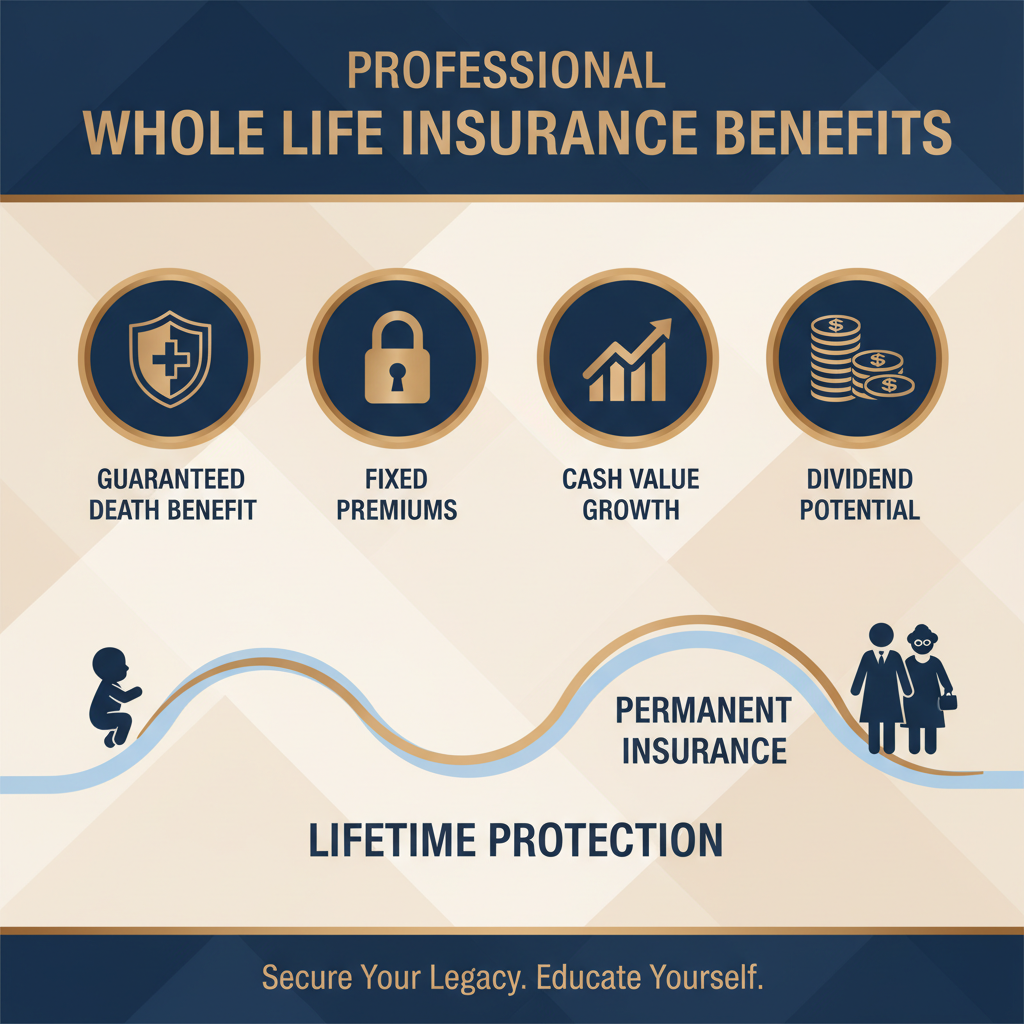
Whole life insurance is a permanent life insurance policy that provides guaranteed coverage for your entire lifetime, as long as premiums are paid. Unlike term insurance, which expires after a set period, whole life combines a death benefit with a cash value component that grows over time. The policy guarantees both a fixed death benefit for your beneficiaries and a minimum rate of return on the cash value account. Premiums remain level throughout your life, never increasing with age or health changes. This makes whole life insurance predictable and stable for long-term financial planning. The cash value grows tax-deferred and can be accessed through policy loans or withdrawals during your lifetime. Whole life has been a cornerstone of financial planning for over 150 years, providing both protection and savings in a single, guaranteed package.
How Does The Cash Value Work?
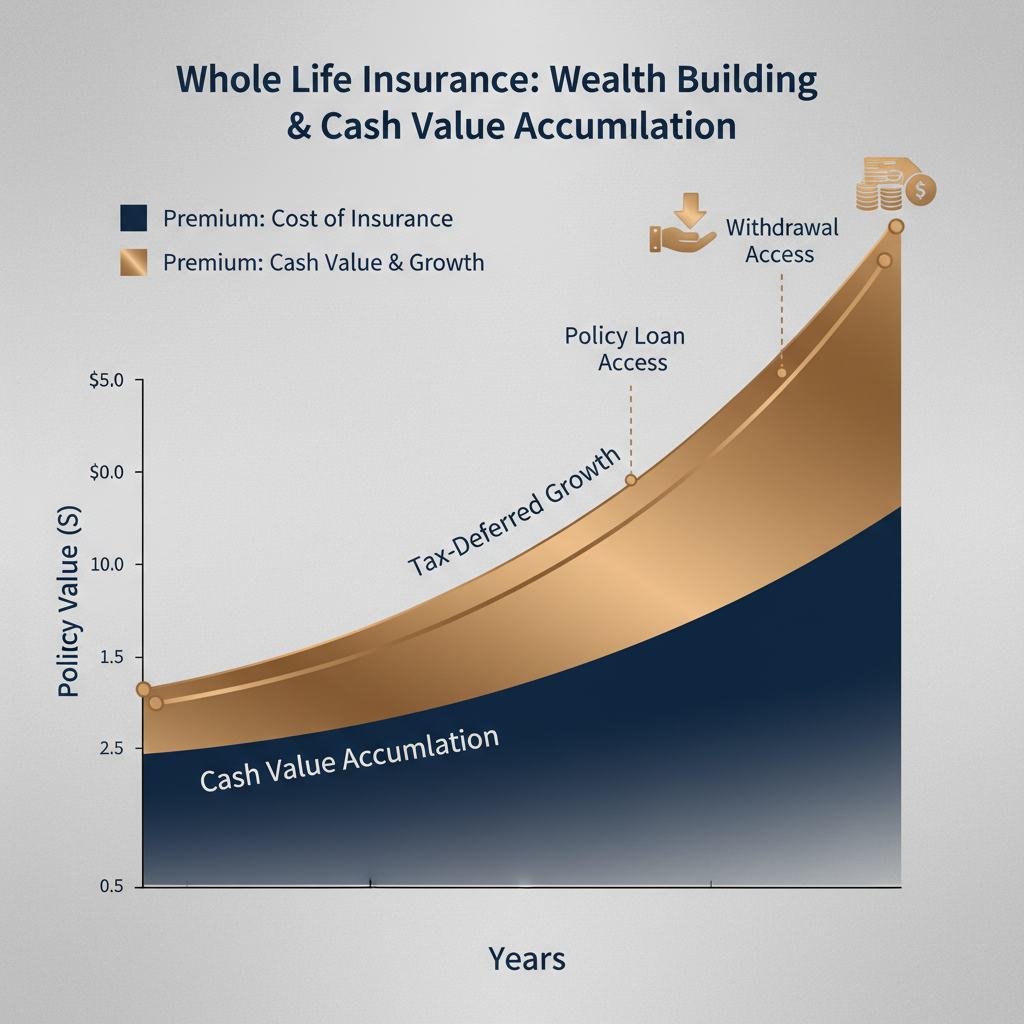
The cash value in a whole life policy is a savings component that grows at a guaranteed minimum interest rate set by the insurance company. A portion of each premium payment goes toward the cost of insurance, while the remainder is allocated to the cash value account. This cash value grows tax-deferred, meaning you pay no taxes on the annual gains. The insurance company may also pay dividends (if it's a mutual company), which can be taken as cash, used to reduce premiums, or reinvested to purchase additional paid-up insurance, further increasing both cash value and death benefit. You can borrow against the cash value at favorable interest rates, and the money can be used for any purpose — retirement income, college funding, business opportunities, or emergencies. Even with an outstanding loan, the full death benefit remains intact for your beneficiaries, though the loan balance plus interest will be deducted from the death benefit if not repaid.
Are Premiums Guaranteed?
Yes, whole life insurance premiums are guaranteed to remain level for your entire life. When you purchase the policy, the premium amount is locked in based on your age and health at that time. It will never increase, regardless of changes in your health, age, or market conditions. This guaranteed level premium is one of the most valuable features of whole life insurance, providing predictability for long-term budgeting. The premium is calculated to be higher in the early years than the actual cost of insurance, with the excess building the cash value. In later years, when the cost of insurance exceeds the premium, the difference is covered by the accumulated cash value. This overfunding structure in early years is what allows the premium to remain level throughout your lifetime. This contrasts sharply with term insurance, where premiums increase dramatically at each renewal, or universal life, where premiums can fluctuate based on market performance.
What Are Dividends?
Dividends are payments made by mutual insurance companies to policyholders when the company performs better than expected. These dividends are not guaranteed and depend on the company's investment returns, mortality experience, and operating expenses. When dividends are paid, policyholders have several options:
- Take them as cash payments.
- Use them to reduce premium payments.
- Leave them to accumulate interest in a dividend account.
- Use them to purchase additional paid-up insurance, which increases both death benefit and cash value.
- Use them to purchase one-year term insurance equal to the cash value. The most popular option is using dividends to purchase paid-up additions, which compounds the policy's growth over time. Many whole life policies are designed to become "paid up" through dividend purchases, meaning the dividends eventually cover the entire premium. While dividends aren't guaranteed, mutual companies with strong track records have paid dividends consistently for over 100 years, even through economic downturns.
How Is Death Benefit Protected?
The death benefit in a whole life policy is guaranteed as long as premiums are paid. This guaranteed amount is stated in the policy contract and cannot be reduced by the insurance company. The death benefit passes to beneficiaries income tax-free, providing immediate liquidity for final expenses, debt repayment, or wealth transfer. Unlike investment accounts that can lose value, the whole life death benefit is contractually guaranteed. Even if the cash value is borrowed against, the full death benefit remains in force (though the loan balance is deducted from the payout). Some policies offer an increasing death benefit option, where dividends purchase additional paid-up insurance, gradually increasing the total benefit over time. This can help the death benefit keep pace with inflation. The guaranteed nature of whole life makes it ideal for estate planning, business succession, and situations where a guaranteed payout is essential. Beneficiaries receive the death benefit quickly, typically within 30-60 days, without going through probate.
Can I Access Cash Value During My Lifetime?
Yes, accessing cash value is one of the key benefits of whole life insurance. You can take policy loans against the cash value at favorable interest rates, typically without credit checks or income verification. The loan process is simple — you request the amount from the insurance company, and they send you a check or direct deposit. There's no requirement to repay the loan on a specific schedule, though interest accrues on the outstanding balance. The cash value continues to earn dividends and interest even while borrowed against, potentially offsetting the loan interest. You can also make partial withdrawals (up to the amount of premiums paid) without triggering taxes. These withdrawals permanently reduce the death benefit but don't need to be repaid. Common uses include supplementing retirement income, funding children's education, covering medical expenses, or seizing business opportunities. Unlike bank loans, policy loans don't appear on credit reports and don't affect your borrowing capacity for mortgages or other loans.
How Does Whole Life Compare To Term Insurance?
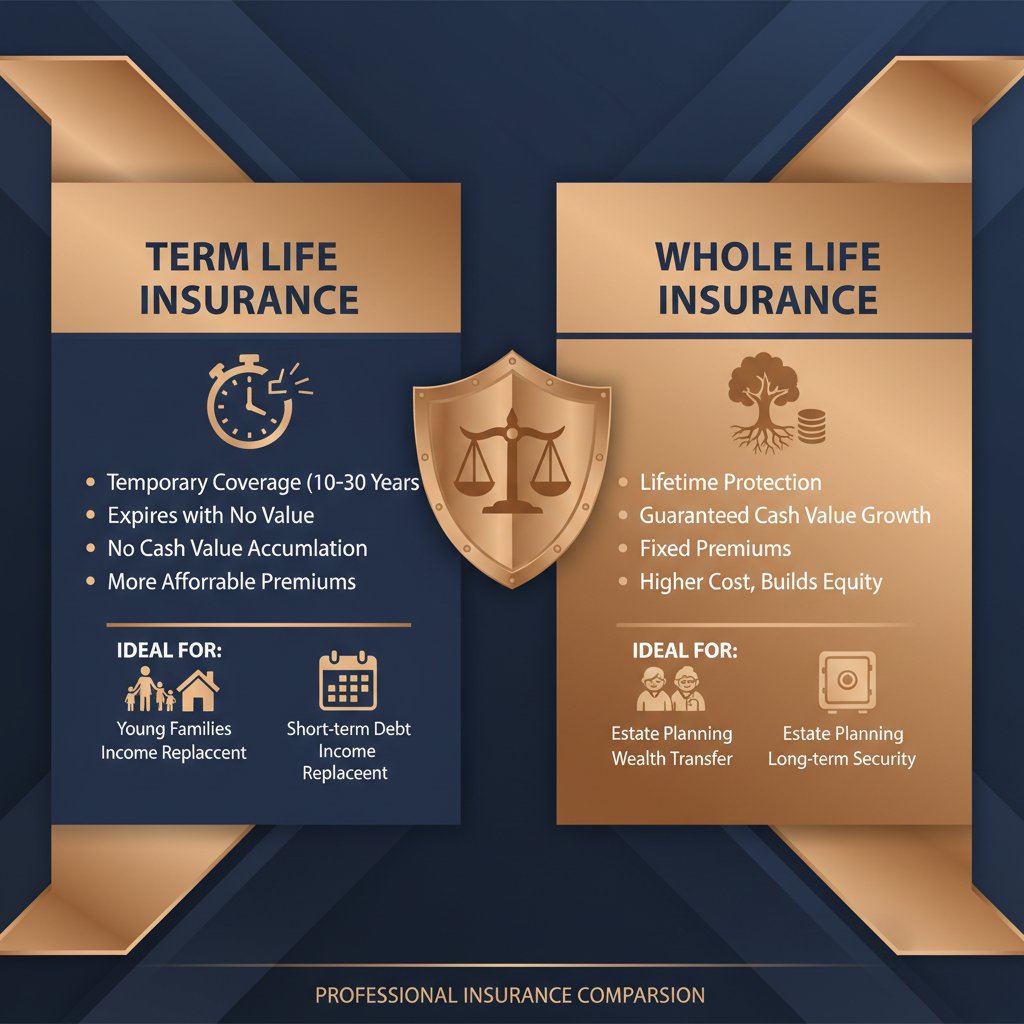
Whole life and term insurance serve different purposes. Term insurance provides temporary coverage for a specific period (10, 20, or 30 years) with no cash value — it's pure insurance protection. Whole life provides permanent coverage for your entire lifetime with a cash value component that builds equity. Term premiums start lower but increase dramatically at renewal, potentially becoming unaffordable when you're older and need coverage most. Whole life premiums are higher initially but remain level forever and build cash value you can access. Term insurance expires worthless if you outlive the term, while whole life guarantees a death benefit whenever you pass. Approximately 99% of term policies never pay a death benefit because people let them lapse or outlive the term. Whole life has a 100% guaranteed payout if premiums are maintained. Term is appropriate for temporary needs (mortgage protection, income replacement during working years). Whole life is ideal for permanent needs (final expenses, estate taxes, special needs dependents, wealth transfer). Many financial planners recommend having both — term for temporary needs and whole life for permanent needs.
Is Whole Life Good For Retirement?
Whole life can be an excellent retirement planning tool when properly structured. The cash value grows tax-deferred and can provide tax-free retirement income through policy loans. Unlike 401(k) and IRA withdrawals, policy loans aren't taxable events, so they don't increase your taxable income or push you into higher tax brackets. This makes whole life particularly valuable for tax diversification in retirement. The guaranteed growth and protection from market losses provide stability alongside more volatile investments like stocks and mutual funds. You can access the cash value at any age without penalties (unlike IRAs, which impose penalties before age 59½). The cash value doesn't affect Social Security taxation or Medicare premiums because it's not counted as income. Many retirees use whole life as a "personal bank" — borrowing against cash value for expenses while the remaining value continues growing. The death benefit provides a legacy for heirs or can replace retirement assets that were spent. While whole life shouldn't replace employer retirement plans (especially with matching), it's an excellent complement for tax diversification and guaranteed income.
Who Should Buy Whole Life Insurance?
Whole life insurance is ideal for:
- Parents with young children who need guaranteed protection and cash value for college funding.
- Business owners seeking key person insurance, buy-sell agreements, or executive compensation.
- High-income earners who have maxed out other tax-advantaged accounts and want additional tax-deferred savings.
- Individuals with permanent needs like final expenses, estate taxes, or special needs dependents.
- Conservative investors who want guaranteed growth without market risk.
- People seeking forced savings discipline — the required premium builds cash value automatically.
- Those wanting to leave a guaranteed legacy to heirs or charities.
- Individuals concerned about outliving their retirement assets. Whole life works best when viewed as a long-term commitment (15+ years) to allow cash value to accumulate meaningfully. It's not suitable for everyone — those with very limited income or purely temporary needs may be better served by term insurance. The ideal candidate understands the long-term nature, values guarantees over maximum potential returns, and appreciates the combination of protection and savings in one vehicle.