Consumer Education
Medicare Enrollment Periods
Medicare Enrollment Periods Guide 2026 - Avoid Penalties
Knowing when and how to enroll in Medicare is critical. Miss a window and you could face permanent penalties. We'll walk you through every enrollment period so you never miss your moment.
Medicare Enrollment: Your Questions Answered
When can I enroll in Medicare?
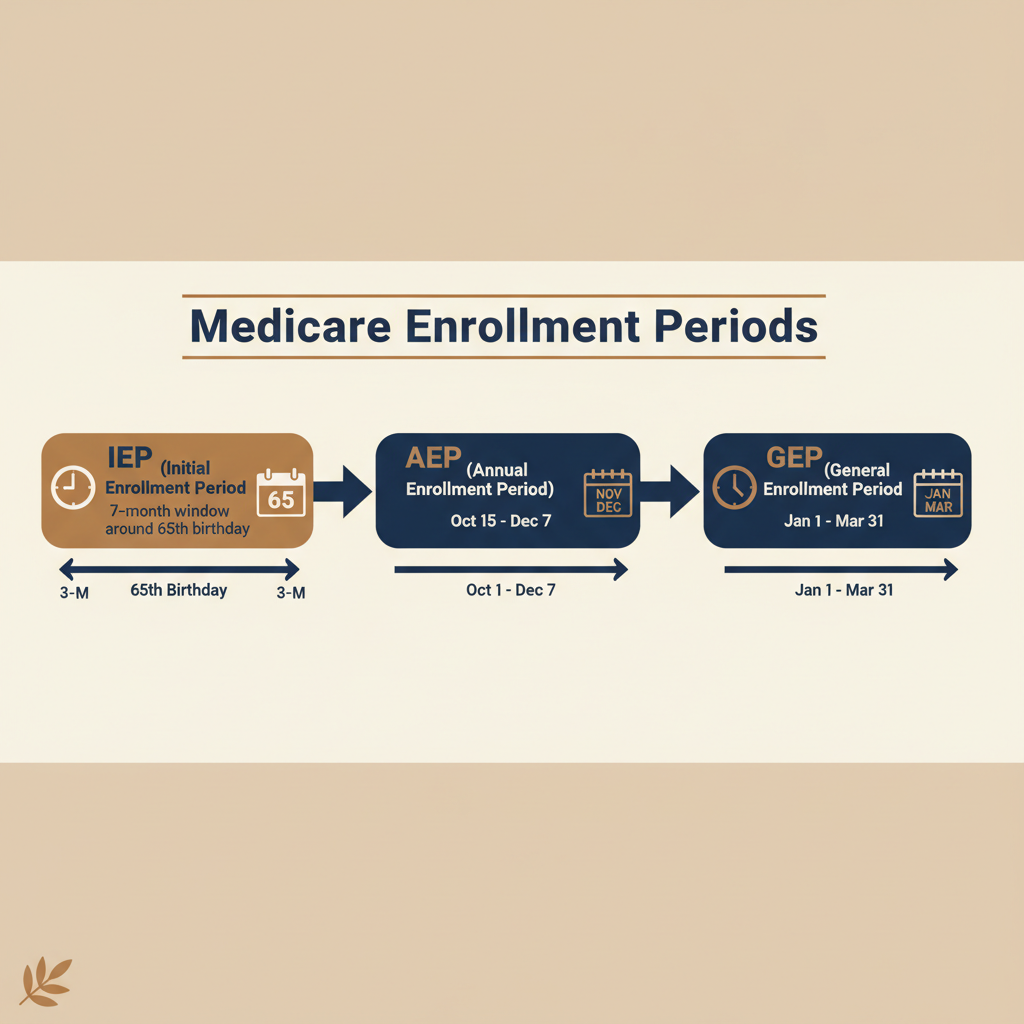
- Initial Enrollment Period (IEP): Your IEP is a 7-month window centered around your 65th birthday. It begins 3 months before the month you turn 65, includes your birthday month, and extends 3 months after. For example, if your birthday is June 15, your IEP runs from March 1 through September 30. Enrolling during this period ensures coverage starts on time and helps you avoid late-enrollment penalties.
- General Enrollment Period (GEP): If you miss your IEP, you can enroll during the GEP, which runs from January 1 to March 31 each year. Coverage begins July 1, but you may face permanent late-enrollment penalties added to your Part B premium.
- Special Enrollment Periods (SEPs): You may qualify for an SEP if you have employer coverage past age 65, are disabled, or experience certain life events like moving out of your plan's service area. SEPs allow penalty-free enrollment outside standard periods.
- Annual Enrollment Period (AEP): If you already have Medicare, AEP (October 15 – December 7) lets you switch between Original Medicare and Medicare Advantage, change Advantage plans, or join/drop/change a Part D drug plan.
What is the Annual Enrollment Period (AEP)?
- Timing: AEP runs from October 15 to December 7 every year. This is the primary time when all Medicare beneficiaries can make changes to their coverage.
- What You Can Do: Switch from Original Medicare to a Medicare Advantage plan, switch from Medicare Advantage back to Original Medicare, change from one Medicare Advantage plan to another, or join/switch/drop a Part D prescription drug plan.
- Effective Date: All changes made during AEP take effect January 1st of the following year.
- Annual Review: Even if you're happy with your current plan, review it annually—plan benefits, premiums, and drug formularies can change each year. Your needs may also change, making a different plan more suitable.
What is the Medicare Advantage Open Enrollment Period?
- Timing: Runs from January 1 to March 31 every year.
- Who Qualifies: Only people already enrolled in a Medicare Advantage plan can use this period. It is NOT available to people with Original Medicare who want to join Advantage.
- One Change Allowed: You may make ONE change during this period—either switch to a different Medicare Advantage plan (with or without drug coverage) OR drop your Medicare Advantage plan and return to Original Medicare.
- If Returning to Original Medicare: You should then consider adding a Part D plan for drug coverage and/or a Medigap policy for gap coverage.
- Effective Date: Changes take effect the first of the month following your enrollment.
What are Special Enrollment Periods (SEPs)?
- Purpose: SEPs allow you to make changes to Medicare coverage outside regular enrollment windows when certain qualifying life events occur.
- Common Qualifying Events: Moving to a new address outside your plan's service area, losing current coverage (e.g., employer coverage ends), your plan leaving Medicare or stopping coverage in your area, qualifying for Medicaid or Extra Help with drug costs, moving into or out of a skilled nursing facility, or being released from incarceration.
- Time Limits: Each SEP has specific rules and time limits—typically 2 months from the qualifying event.
- Verification: Contact a licensed agent to confirm whether your life event qualifies and how long your enrollment window lasts.
What coverage changes can I make during enrollment periods?
- Switch Medicare Advantage Plans: During AEP (Oct 15 – Dec 7) or OEP (Jan 1 – Mar 31 if already in Advantage).
- Return to Original Medicare: Drop your Medicare Advantage plan during AEP or OEP, then consider adding Part D and/or Medigap.
- Join or Change Part D: During AEP, join a new Part D plan, switch drug plans, or drop coverage.
- Join Medicare Advantage for First Time: During your IEP when first eligible, or each year during AEP.
- Important: You generally cannot join a Medigap policy outside your 6-month Medigap Open Enrollment Period unless you have guaranteed-issue rights.
What are late-enrollment penalties?
- Part B Penalty: If you don't sign up for Part B when first eligible and don't have qualifying employer coverage, you pay a 10% penalty for each 12-month period you were eligible but didn't enroll. This penalty is permanent—it lasts as long as you have Medicare.
- Part D Penalty: If you go 63+ consecutive days without "creditable" drug coverage after becoming eligible, you pay a 1% penalty of the national base premium for each month without coverage. Also permanent.
- Example: If you delay Part B enrollment by 2 years without qualifying coverage, you'll pay a 20% penalty on top of your Part B premium every month for life.
- Avoid Penalties: Enroll during your IEP unless you have qualifying employer coverage that allows you to delay.
How do I avoid late-enrollment penalties?
- Enroll During IEP: Sign up for Medicare during your 7-month Initial Enrollment Period around your 65th birthday.
- Qualifying Employer Coverage: If you have employer group health coverage past 65 (yours or your spouse's), you may qualify for a Special Enrollment Period to enroll in Part B later without penalty. The employer must have 20+ employees.
- Creditable Drug Coverage: If you have prescription drug coverage through an employer or union that's as good as or better than Medicare's standard coverage (called "creditable coverage"), you can delay Part D without penalty. You should receive a notice annually confirming this.
- Document Everything: Keep records of your coverage to prove you had qualifying coverage if Medicare questions your enrollment timing.
What happens if I miss my Initial Enrollment Period?
- General Enrollment Period: If you miss your IEP and don't qualify for an SEP, you can enroll during GEP (January 1 – March 31). Coverage begins July 1.
- Penalties Apply: You'll likely face permanent late-enrollment penalties for Part B (and Part D if you went without creditable drug coverage).
- Coverage Gap: There may be a gap between when you enroll and when coverage starts, leaving you without insurance.
- Limited Options: You cannot enroll in Medicare Advantage or Part D during GEP—only Part A and/or Part B. You'd need to wait until AEP (Oct 15 – Dec 7) to add Advantage or Part D.
- Act Quickly: Don't delay further—enroll as soon as you're able to minimize penalties and coverage gaps.
Can I change Medicare Advantage plans anytime?
- No—Only During Specific Windows: You can only change Medicare Advantage plans during AEP (Oct 15 – Dec 7), the Medicare Advantage OEP (Jan 1 – Mar 31, if already in Advantage), or if you qualify for an SEP.
- AEP Changes: During AEP, you can switch from one Advantage plan to another, switch to Original Medicare, or join Advantage for the first time.
- OEP Changes: During OEP, if you're already in Advantage, you can switch to a different Advantage plan OR return to Original Medicare (one change only).
- SEP Changes: If you qualify for a Special Enrollment Period due to a life event (moving, losing coverage, etc.), you may be able to change plans outside standard windows.
- Review Annually: Plans change benefits, premiums, and provider networks yearly—review your plan during AEP even if you're satisfied.
Should I work with a licensed Medicare agent?
- Complexity: Medicare enrollment rules are complex—IEP, AEP, OEP, SEPs, GEP, penalties, coverage options. A licensed agent helps you navigate without missing critical deadlines.
- Plan Comparison: Hundreds of Medicare Advantage and Part D plans exist with varying costs, benefits, and provider networks. Agents can compare options based on your doctors, medications, and budget.
- Penalty Prevention: An agent ensures you enroll at the right time to avoid permanent late-enrollment penalties.
- No Cost to You: Licensed agents are compensated by insurance companies, not you. Their guidance is free.
- Ongoing Support: A good agent provides year-round support, not just during enrollment—helping with claims issues, plan changes, and life events that affect your coverage.
Don't Navigate Enrollment Alone
Medicare enrollment rules can be complex and the timing matters. A licensed agent can help you identify your enrollment window, avoid penalties, and find the right plan for your situation.